Snake Plant Care: 5 Simple Rules From 4 Years of Growing
Snake plant care without guesswork: how often to water in summer and winter, why leaves droop, when to repot, and how to propagate a plant you already own.
Key takeaways
- Water when the soil is dry two inches down: every two to three weeks in summer, every four to eight weeks in winter.
- Drooping leaves mean thirst or rot. Wrinkled and leathery is dry; soft at the base with damp soil is rot.
- A snake plant tolerates very low light, but a windowless hallway is no light, not low light.
- Keep it in a snug pot with drainage holes, and repot only when roots show at the surface or through the holes.
- Propagate by offsets or by division if you want the same variegation; leaf cuttings work but revert to plain green.
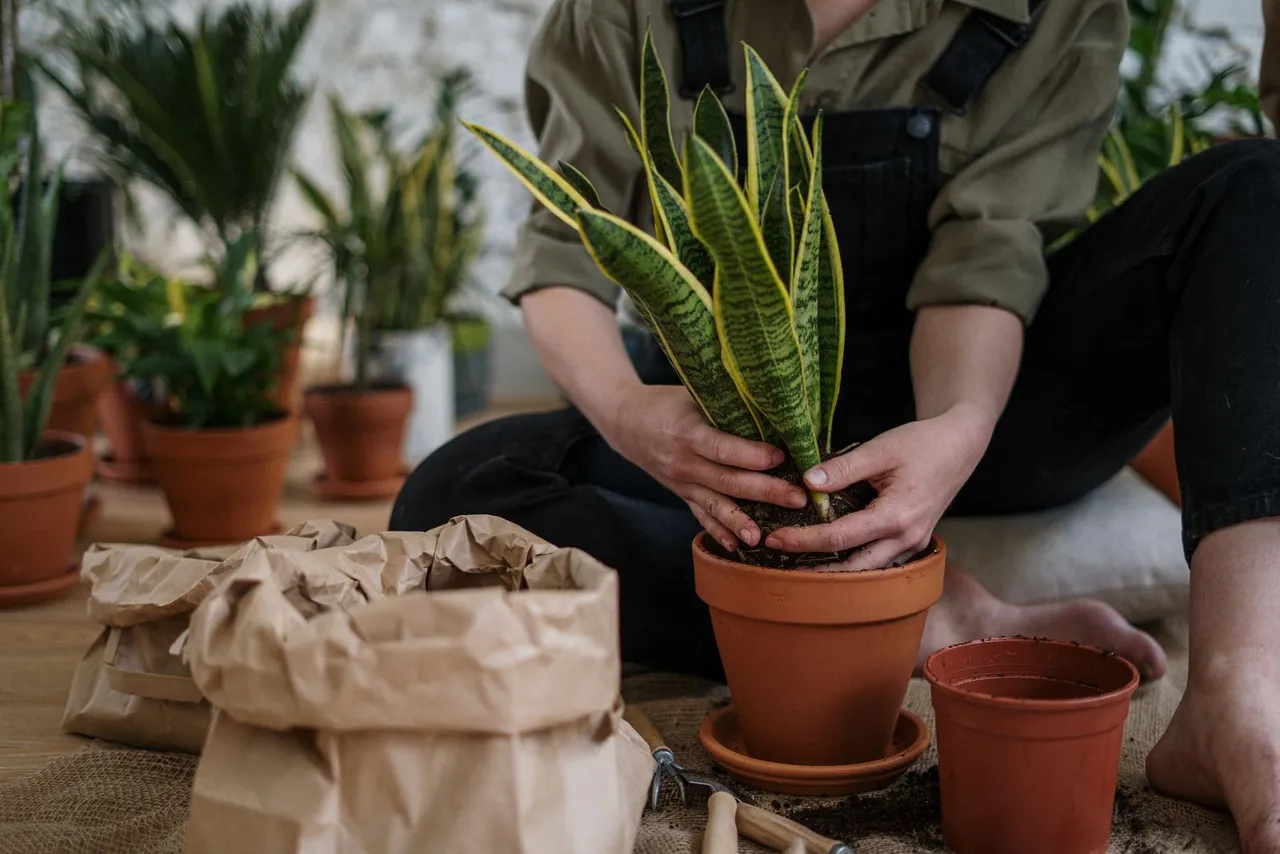
Snake plant care is mostly a lesson in doing less. I have kept the same plant in a north-facing hallway since 2022, in the same 6-inch pot, and it has been watered about eight times a year since. It made two new leaves last summer. That is the whole scoreboard, and it answers most of the questions people send me about this plant.
What kills a snake plant is rarely neglect. It is kindness: the weekly splash that feels responsible, in a pot that cannot drain, in a room too dim for the soil to dry out. Every snake plant care rule below exists to keep water and roots apart until the plant has actually used the last drink.
What snake plant care actually asks of you
Five decisions, in the order they usually go wrong: how often you water, what the plant is sitting in, how much light it gets, when it earns a bigger pot, and whether you propagate it at all. Water first, because it is the only one you touch weekly. Pot next, because a pot that holds water turns a small mistake into a slow one. Light after that, because the plant is far more forgiving about light than the internet suggests. Repotting and propagation are the two you can postpone for years at a time.
The mechanism is worth thirty seconds, because it explains everything else. Clemson Extension’s watering factsheet states the failure plainly: roots need both water and oxygen, and when they are surrounded by water they cannot take up oxygen, so they rot. A snake plant’s roots evolved in dry ground and are built for air pockets. Firm leaves and a damp pot are not a plant that is happy; they are a plant whose roots have been drowning since the last time you watered.
Its second advantage is speed, or the lack of it. The RHS calls sansevierias “relatively slow-growing”, and slow growth means little water used, which means the gap between drinks is genuinely long. Most houseplant care is about keeping up with a plant. Snake plant care is about staying out of its way.
Snake plant watering: how often and how much
Water when the mix is dry two inches down: every two to three weeks in spring and summer, every four to eight weeks in winter. The calendar is a reminder to check, never an instruction to pour.
NC State Extension’s plant profile gives the seasonal rhythm: let the soil dry between waterings from spring to autumn, and in winter water only every one to two months. Illinois Extension puts it even shorter — in winter, water just enough to keep the foliage from shrivelling. Those two statements together are the whole snake plant watering schedule, and neither of them mentions a fixed number of days, because the number depends on your room.
Snake plant watering by season, with the room doing the deciding:
| Season | How dry the mix gets, in a bright room | What to do |
|---|---|---|
| Spring, new growth | dry two inches down in 10–14 days | soak at the soil line, then leave it |
| Summer, full light | 10–14 days; three weeks in a dim corner | same volume; the room sets the pace |
| Fall, light fading | about three weeks | half the summer volume |
| Winter, near dormancy | four to eight weeks; NC State says one to two months | just enough that the leaves stop shrivelling |
Push your finger in deeper than you would for a pothos, about two inches. Surface dryness tells you nothing here, because the leaves are holding a reservoir of their own. Clemson’s factsheet lists the other free instruments: tap the side of a clay pot and listen — dull means moist, hollow means dry; lift the pot after watering and again a few days later, because a dry pot is noticeably lighter. I use the weight test on the hallway plant, and after four years I can tell from the lift whether it needs anything at all.

Photo: cottonbro studio via Pexels (https://www.pexels.com/photo/a-man-watering-green-houseplants-9710641/)
When the answer is yes, water properly. Pour slowly until it runs out of the drainage holes, wait five minutes, then pour again; very dry mix repels water at first and the second pass is what actually soaks the rootball. That second pass is the step most snake plant watering gets wrong, because the first pour looks like enough. Then tip away whatever collected in the saucer. A plant that stands in its own runoff is being watered twice, and the second time is the one that rots it.
Snake plant watering in winter
In winter the answer changes twice — less often, and smaller. Four to eight weeks between drinks covers most homes, and a plant in a genuinely cool room can go the full eight. That is not folklore about dormancy: winter snake plant watering is arithmetic. Less daylight means less growth, and less growth means less water used, which the RHS states directly: in winter growth slows and the plant draws on the water stored in its fleshy leaves.
The exception is a warm room, and it is where snake plant care diverges most from general houseplant advice. The RHS qualifies its own winter guidance with “unless they’re in a particularly warm spot”, which covers the plant on a shelf above a radiator in a heated apartment. Warm air and a warm pot keep the mix drying, so a plant in that position may need water every three weeks in January.
Mine, in a hallway that sits around 62°F, gets one watering all month. I measured that hallway for a week in January with a cheap thermometer on the shelf: it moved between 61°F and 64°F, which is inside the 60–75°F range the RHS gives for sansevierias and well clear of the “cool temperatures around 50 degrees” that NC State says the plant tolerates.
Two winter mistakes cost more than they look. The first is watering on the summer schedule because the calendar says so; the mix is still wet from a fortnight ago and you are adding to it. The second is a cold windowsill in an unheated room. Cold wet roots rot faster than warm wet ones, and one night near freezing marks the leaves for months. Move the pot a foot inward in December and back out in March.
Snake plant leaves drooping: read the base, not the leaf
Snake plant leaves drooping is the most common question I get, and the answer is always at the base of the leaf rather than the tip. It means one of two opposite things, and the base tells you which.
If the leaf is wrinkled, leathery and slightly soft along its length, and the soil is bone dry, the plant is thirsty. It has spent the water it was storing. Water slowly in two passes a few minutes apart, and it will firm up within a week.
If the leaves are still firm but falling outward, and the base is soft, dark or mushy, and the soil is damp, the roots have rotted. No amount of drying out brings those roots back. Take the plant out, cut away everything soft with a clean knife, and repot the firm part in fresh gritty mix; then leave it alone for two weeks.
A third pattern looks like drooping and is not: a plant that leans steadily toward the window while the leaves stay firm. That is phototropism, and the fix is mechanical. The RHS’s own top tip is to turn the pot a quarter turn every time you water, which is the cheapest correction in this article.
The RHS flags a fourth case that reads as snake plant leaves drooping but is not: tall cultivars kept in particularly low light sometimes flop individual leaves, and those can be propped with a cane or a wire hoop until they firm up. If the whole plant leans instead of one leaf, check for rot before you reach for a support.
My own expensive lesson was the pot, not the water. In 2021 I potted a young plant into a 12-inch decorative container because it looked better in the corner than the nursery pot did. The mix stayed damp for a month at a time, three of the four leaves went soft at the base, and I lost the plant except for one offset. That offset went into a 6-inch pot, and it is the plant still sitting in my hallway today.
How much light does a snake plant need?
It needs somewhere between bright shade and a few hours of direct sun, and it will survive far less than that. NC State lists it as tolerating very low light but growing best where it gets direct sun for two to six hours, and the RHS says it thrives in sun or light shade. Light sets the pace rather than the survival, which is why snake plant care in a dim room is a slower, quieter job rather than a different one.
“Low light” has numbers, which is what most guides leave out. Illinois Extension measures houseplant light in foot-candles: low light is about 75 foot-candles, which is a north window a few feet away, an east or west window three to ten feet in, or a south window fifteen to twenty feet into the room. Medium is 150, bright is 300, and direct sun at a south window is around 1,500. Snake plant low light means the 75 end of that table, and Illinois puts the species on its own list of houseplants for low light.
That gives you a way to judge a corner before committing a plant to it. A hallway with a window at one end is snake plant low light. A windowless bathroom or an internal corridor is no light, and no plant lives there without a lamp. If the leaves stretch long and thin between the bands of colour, or new leaves come in narrower and paler than the old ones, the corner is darker than the plant can handle; the fuller method for those rooms is in houseplants for a dark hallway.
Light also explains the plant’s patience with dry air, and the mechanism is unusual. Succulent leaves open their pores at night and fix carbon into malic acid, then use it by day — that is CAM photosynthesis, and it means the plant feeds while keeping its pores shut through the hottest hours. You do not need the biochemistry to grow one. You need it to understand why this plant wants a dry room and a dry pot and will sulk in a steamy bathroom, which the RHS explicitly warns against.
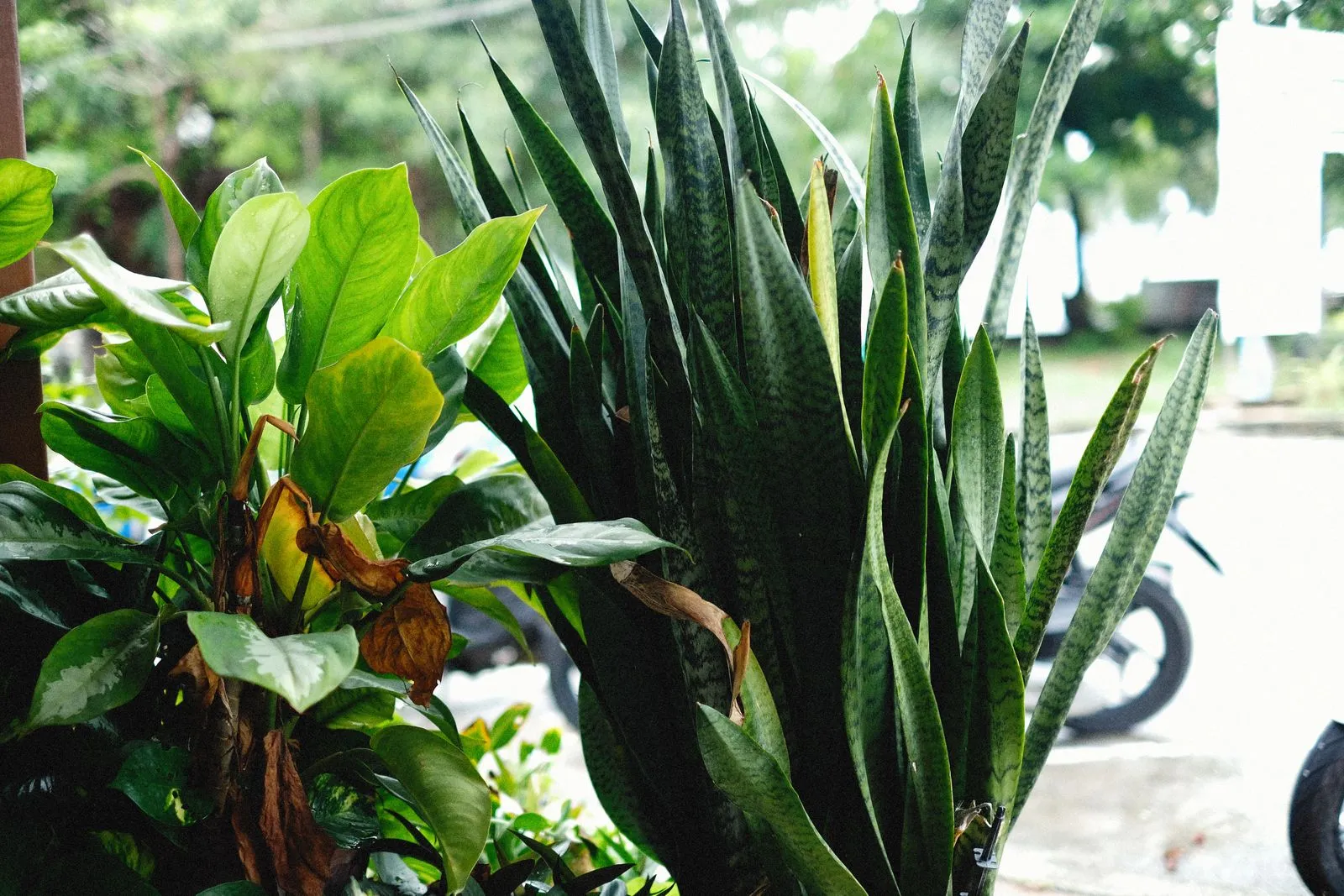
Photo: Alexey Demidov via Pexels (https://www.pexels.com/photo/green-plants-in-close-up-photography-12174069/)
One caution from the RHS: in summer, keep it out of midday sun, which scorches the leaves. Morning sun and late afternoon sun are kind; a south window at noon in July is not, and a plant moved outdoors for the summer needs hardening off and a place back inside well before any hint of frost.
The pot rule: snug, draining, and left alone
If watering is half of snake plant care, the pot is the other half. The RHS sansevieria care guide is direct: sansevierias prefer a cosy-fitting pot and only need repotting once the roots and leaves have completely filled the container or are causing it to buckle. A pot with plenty of drainage holes, a free-draining cactus mix, and a size that looks almost too small are all correct.
Overpotting is the specific mistake. A much larger pot holds a lot of spare compost that stays damp after watering, which encourages root rot; the RHS names overpotting as a problem in its own right. The plant does not fill that space with roots; it sits in it. If the roots are already circling the old pot, loosen them rather than cramming them into the new one.
For mix, the RHS gives a recipe: a free-draining peat-free cactus compost, or two parts loam-based compost to one part horticultural grit or fine gravel. If you mix your own potting soil for other plants, read potting mix and compost first, because a rich moisture-retaining mix that suits a fern is the wrong end of the spectrum here.
Pot material matters less than drainage, but it is not nothing. Terracotta wicks moisture through its walls and dries faster, which suits a plant in a cool dim room. Glazed ceramic and plastic hold moisture in, which suits a plant in bright light that drinks quickly. What none of them fix is a pot with no holes. If you love a decorative cachepot, keep the plant in a plain nursery pot inside it and lift the inner pot out to water at the sink; that one habit prevents most of the rot in this article.
When to repot a snake plant
Repot when the plant shows you it needs it, not on a schedule, which makes this the least urgent part of snake plant care. Illinois Extension lists the five signals worth checking: roots growing through the drainage holes, roots appearing at the soil surface, a soil mass filled with roots, new leaves smaller than normal, and a plant that wilts between normal waterings. Any one of them is a reason to look closer; the first two are a reason to act.
Timing is spring or early summer, when the plant is actively growing. The mechanics are ordinary. Knock the plant out, look at the roots, cut or unwind any that circle the pot, and scrape away the top inch of soil if there is a crusty white salt residue on it. Then replant at the same depth it grew at, into a pot only slightly wider, with fresh gritty mix. Firm it in and water immediately, and leave a little headroom at the top so water does not run straight over the rim.
One caution for a plant that has been in the same pot for years: the rootball may be more grit and old bark than soil, and fresh mix around a dense mat of roots drains poorly no matter how gritty it is. If the mass is solid, tease it apart with your fingers before you repot, and cut back any dead roots you find. A plant repotted into the same compacted rootball in a larger pot is the overpotting problem with extra steps.
Snake plant propagation: three routes to a new plant
Snake plant propagation runs on the plant’s own structure, and the RHS gives three routes, best taken in spring (March to May) when growth is restarting. Whichever you choose, wear gloves: the sap is a skin irritant.
Offsets. An established plant produces young rosettes around the outside of the clump. Take the plant out of its pot, pull away the offsets that already have roots, and pot them individually, or several together for a fuller pot. Put the parent back in its original pot with fresh mix to fill the gaps.
Division. For a large clump, split it into pieces that each carry one or more leaves on fibrous roots. The rootball usually prises apart by hand, though a sharp knife or secateurs may be needed on the tough parts. Discard damaged sections and repot only healthy ones; tall divisions may need a cane until they are self-supporting.
Leaf cuttings. Cut a mature leaf at the base and slice it widthways into 2-inch (5 cm) sections, keeping them the same way up as they grew. Leave them in a dry place for a day or two so the cut faces callus over, then insert half of each section, bottom end down, into damp gritty cuttings compost. Bottom heat around 65°F (18°C), or a sealed clear bag in a warm room, is what makes them root. This is the slowest route, and the one with a catch: the RHS notes that cuttings from a variegated cultivar tend to produce plants that revert to plain green. If you want the yellow margins back, divide the plant instead.
My own attempt at snake plant propagation was six leaf sections, kept on a warm shelf, and two plants at the end of it — both plain green, from a plant with gold edges. It took most of a season. The RHS’s warning is real, and division would have given me the variegation in a fortnight.
Feeding, dust and the quarter turn
The rest of sansevieria care is housekeeping, and it is easy to overdo. Feed once a month through the growing season — April to September — with a liquid houseplant or cactus feed, and nothing at all in winter. A plant that is not growing cannot use the food, and the surplus salts sit in the mix and crust on the surface.
Wipe the leaves with a damp cloth every few weeks. In a dim room a dusty leaf is a leaf doing less work, and this plant has little light to spare. Never mist it: the RHS notes that sansevierias like low humidity, so misting and a steamy bathroom are the wrong direction. Good airflow around the leaves matters more than anything you can spray on them.
Pests, and the rot that ends the argument
A healthy snake plant is not often troubled, but three problems are worth a monthly look. Mealybugs hide in the crevices between leaves at the base, where a quick glance never reaches; the RHS lists them as the most common pest, along with red spider mites, which usually only appear in hot dry conditions. NC State names the same two. Wipe them off with a damp cloth and check the same spot again a fortnight later, because the ones you cannot see are the ones that come back.
The third is the one that gets misdiagnosed. Vine weevil grubs feed on the fleshy roots below the surface, and the symptom you see is leaves collapsing with no rot and no thirst — the plant has lost its anchor. If several leaves fall over at once in a plant you have been watering correctly, tip it out and look at the roots. This is the one case where the answer to “why is my snake plant dying” is genuinely not water.
Every other collapse in this article comes back to the same cause, and it is worth repeating because it is the whole of snake plant care: firm leaves, a damp pot and a dim corner. The fix is less water, a smaller pot, or more light, and usually two of the three.
A routine that survives a busy month
Once a month, walk the room with a finger. Push it two inches into each pot, water only the ones that come up dry, empty the saucers, and turn each pot a quarter turn. That is fifteen minutes a month, and it replaces every schedule you have been given. That is snake plant care in one paragraph, and it works in a bright kitchen and a dim hallway alike. Once a quarter, lift each pot and look at the drainage holes; once a year, in spring, check whether anything needs repotting or dividing.
If the finger test and the slow soak are still new to you, the full method is in how to water houseplants, written for every room rather than the dim one, and what the damage on a plant’s leaves is telling you covers the reading of symptoms this plant hides so well. More plant guides live under Plants and Care.
Snake plant care comes down to restraint, and to trusting the pot over the calendar. Water it less than you think, in a pot smaller than you think, and leave it where it can see a little sky. The plant does the rest, quietly, for years.
QUESTIONS GARDENERS ASK
Common questions
How often should I water a snake plant?
Water when the mix is dry two inches down, which is roughly every two to three weeks in spring and summer and every four to eight weeks in winter. Push a finger into the soil rather than trusting a calendar, and let the pot drain completely before it goes back in its saucer.
How much water should a snake plant get at one watering?
Enough that it runs out of the drainage holes. Pour slowly, wait five minutes for the mix to take it up, then pour again until it drains. A small splash that only wets the surface leaves the lower roots dry, and the plant has no way to tell you.
Why are my snake plant leaves drooping?
There are two opposite causes. Leaves that feel wrinkled and leathery along their length, in bone-dry soil, are thirsty. Leaves that stay firm but fall outward, with a soft or mushy base and damp soil, have rotted roots. Water the first and repot the second into fresh gritty mix.
Can a snake plant live in a dark hallway or low light?
It tolerates very low light better than almost any other houseplant, but it grows slowly and puts out fewer leaves. A hallway with a window at one end will support one near that end. A hallway with no window at all will not, because even a shade plant needs some daylight to make food.
How often should I repot a snake plant?
Rarely. It prefers a snug pot, so leave it until roots appear at the soil surface or through the drainage holes, the pot starts to buckle, or new leaves come in smaller than the old ones. Spring or early summer is the time, and the new pot should be only one size wider.
Can I propagate a snake plant in water?
You can root a leaf section in water, but it is slower and the roots are brittle when they finally form. Leaf sections callus for a day or two and go into damp gritty compost instead, with warmth underneath, which is the method the RHS gives. Either way, cuttings from a variegated plant come back plain green.
Why does my snake plant have brown or split leaf tips?
Usually a watering problem, not a disease. Dry brown tips on a plant that has gone months without water are scorch from thirst; soft brown patches spreading from the base are rot. Split leaves in a dry room are mechanical damage from low humidity, which this plant tolerates but does not enjoy.
Is a snake plant safe around cats and dogs?
No. NC State Extension lists it as poisonous, with saponins as the toxic principle and sap that irritates skin, and the RHS says the same. Keep it out of reach of children and pets, and wash your hands after handling a cut leaf.
Sources
- NC State Extension — Dracaena trifasciata (snake plant) plant profile
- RHS — How to grow sansevierias
- Illinois Extension — Houseplants: lighting
- Illinois Extension — Mother-in-law tongue (snake plant)
- Clemson HGIC — Indoor plants: watering (HGIC 1459)
- Annals of Botany — Crassulacean acid metabolism at the crossroads (PMC10799977)
 Plants & Care
Yellow Leaves on Plants: 5 Causes and a Simple Test
Yellow leaves on plants are a diagnosis, not a verdict: five causes worth checking, from waterlogged roots to iron locked by pH, and a test that separates them. Plants & Care
How to Water Houseplants: 3 Simple Signals to Read
How to water houseplants without a calendar: three signals in the pot, a soak that reaches every root, and a seasonal table for real rooms and windows. Plants & Care
When to Start Seeds Indoors: A Simple 2027 Calendar
When to start seeds indoors is arithmetic: count the packet's weeks back from your last frost, then use the 2027 calendar by USDA band to fix the sowing date.Reading us often? Add MyGreenyGarden as a preferred source on Google and our guides are more likely to be highlighted when you search.