How to Water Houseplants: 3 Simple Signals to Read
How to water houseplants without a calendar: three signals in the pot, a soak that reaches every root, and a seasonal table for real rooms and windows.
Key takeaways
- Check the mix two inches down: damp means wait, dry and crumbly means water. That single test settles most of when to water houseplants.
- Pour until water runs out of the drainage holes, wait thirty minutes, then empty the saucer. Roots need oxygen as much as water.
- Overwatering houseplants is almost always a frequency problem, not a volume problem. The fix is a longer gap, never a smaller pour.
- A 6-inch pot in a bright summer window can dry out in three days; the same pot in a cool dim corner can go three weeks.
- In winter, central heating dries the air and the mix together, so the room that needs the most checking is the warm one.
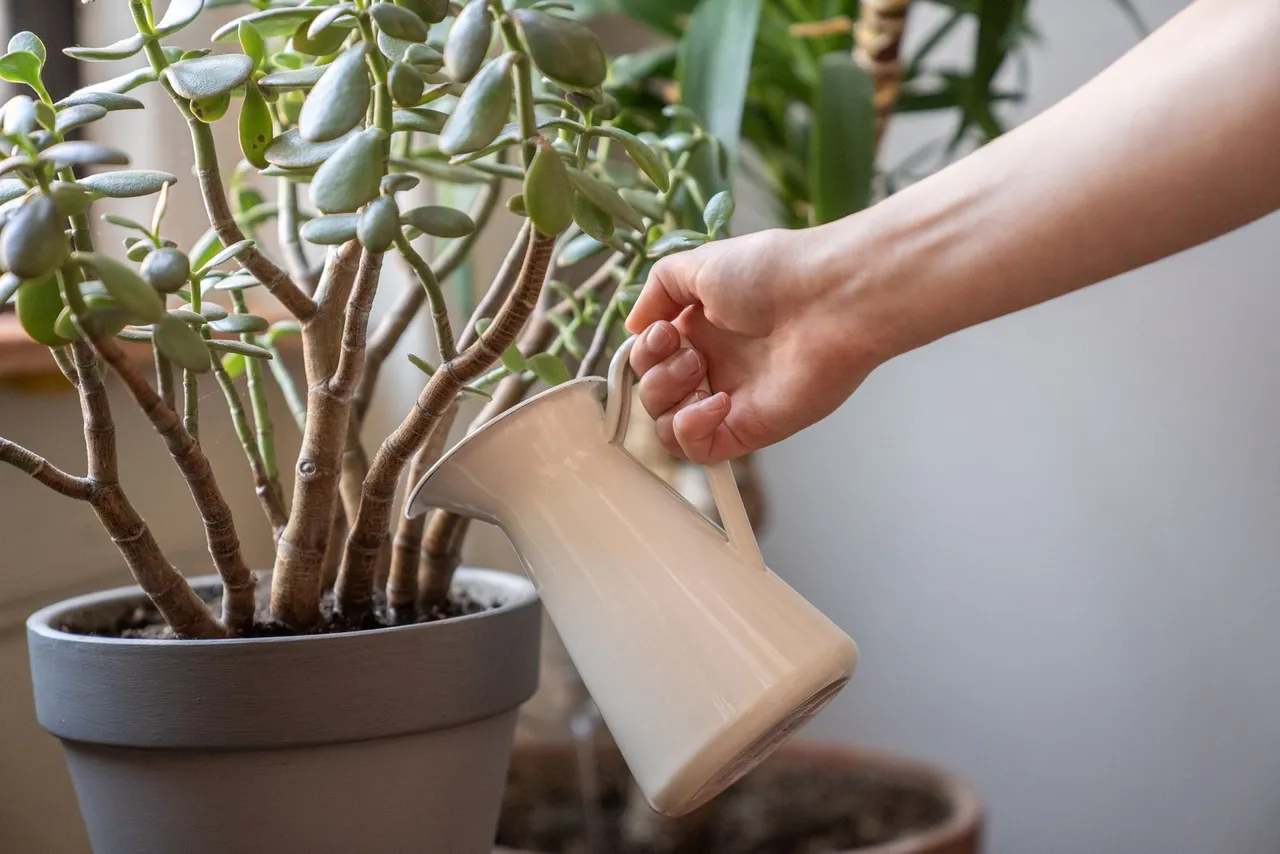
Knowing how to water houseplants is really one skill with three readings: the weight of the pot, the feel of the mix two inches down, and the color of the leaves a week later. Schedules, saucers, cachepots and water filters are all detail hanging off those three readings. Get them right and the rest follows. Get them wrong and no amount of advice about watering once a week will save the plant.
Most houseplant problems start the same way: a watering can in too eager a hand. The plant in a bright south window in July can want water every three days. The same plant in a dim corner in January might go three weeks. A calendar cannot know that, and neither can a plant tag that says water weekly, which was written for a greenhouse.
What a calendar also cannot tell you is that the two failures — too much water and too little — look almost identical above the soil. Extension services say it plainly: the symptoms of over-watering and underwatering are similar, and both lead to poor root health and possibly the death of the plant. So the useful work is not choosing a frequency. It is learning to read the pot in front of you.
Why watering goes wrong more often than any other care
Because it is the one input you control daily, and the one that suffocates roots when it stays. Clemson Extension’s watering factsheet opens with the sentence that should be printed on every watering can: the main cause of death of potted plants is over-watering, because roots need both water and oxygen, and when surrounded by water they cannot take up oxygen. That is why overwatering houseplants is a more common way to lose a plant than neglect.
The mechanism is worth thirty seconds, because it explains every rule later in this article. A pot is a small closed volume of air and water. When you pour, water displaces air from the pore spaces in the mix. In a freely draining pot, gravity pulls the surplus out through the holes within minutes and air moves back in behind it. In a mix that stays saturated, in a pot with no holes, or in a saucer left full, those pore spaces stay filled. Air does not get back in, and root respiration stops.
The peer-reviewed number behind stops is well defined. Hypoxia — the point at which oxygen limits aerobic respiration — occurs at roughly 1% to 5% oxygen in the root zone, and waterlogging is the saturation of soil with water where roots cannot respire because of the excess (Loreti and Perata, Plants, 2020). Below that threshold a root switches to anaerobic respiration, which yields a fraction of the energy, and it stops pulling water up the plant.
Which produces the cruelest part of the whole business: the plant wilts. It wilts for the same visible reason a thirsty plant wilts, so the natural response — water it — pours more water into a root system that is already short of air. Clemson makes the point twice, once for underwatering and once for overwatering, because the two are so easy to confuse on sight.
The 3 signals that say a plant is thirsty
You do not need a moisture meter, and extension advice is lukewarm about them anyway: the readings can be skewed by soil type and fertilizer. You need a finger, a lift, and a glance — those three are the whole of how to water houseplants by feel, and the answer to when to water houseplants falls out of them.
The finger, at the right depth. Illinois Extension’s method is to test the soil with your finger to a depth of two inches; if it is dry at that depth, the plant probably needs water. Clemson describes the same test to the first joint, which is roughly an inch, and the difference matters. Match the depth to the pot: two inches for a 6-inch pot or larger, an inch for a 4-inch pot, where two inches would take you to the bottom of the root ball. What you are testing is the water the roots can actually reach, not the surface, which dries first and misleads most often.
The weight. Lift the pot right after it drains, then lift it again in a few days. Clemson calls it estimating weight — as potting mix dries, a definite loss in weight can be observed — and the RHS puts it in one line: drier pots feel lighter than wet ones. Once you know a plant, the lift takes a second and works on a shelf of ten.
I bought a cheap kitchen scale in the summer of 2023 for exactly this, and the numbers were more useful than I expected. A 6-inch pot holding a philodendron weighed 1 lb 12 oz straight after watering and draining, and 1 lb 4 oz nine days later. Eight ounces of water had gone into the plant and the room over nine days. It also told me that the pots I assumed were dry on day four were still carrying most of their water.
The color, and the surface. Potting mix darkens when wet and lightens as it dries, which Clemson lists as a free gauge. If your finger cannot reach two inches into the mix at all, that is information too: the mix is too dense, or the pot is root bound and there is more root than soil.
On an unglazed clay pot there is a fourth, free test: rap the side with your knuckles. A dull sound means moist, a hollow one means the mix has shrunk away from the wall and the pot needs water. It only works on terracotta, and it only works once you have heard both sounds on the same pot.
How to water houseplants: the pour that reaches the whole root ball
The answer is two passes. Water until it runs out of the bottom of the pot, wait about thirty minutes, then water again. Clemson recommends the second pass by name — the double watering method — for mix that has become very dry. The first pass mostly runs down the gap between a shrunken root ball and the pot wall, and the second soaks what is left.
The reason to soak rather than splash is where the roots are. Clemson points out that watering until it drains out of the bottom is what gets the bottom two-thirds of the pot wet, and that is where most of the roots are. A light surface sprinkle wets the top inch, where there are few roots, and leaves the working roots dry. It also washes nothing out, which matters later in this article.
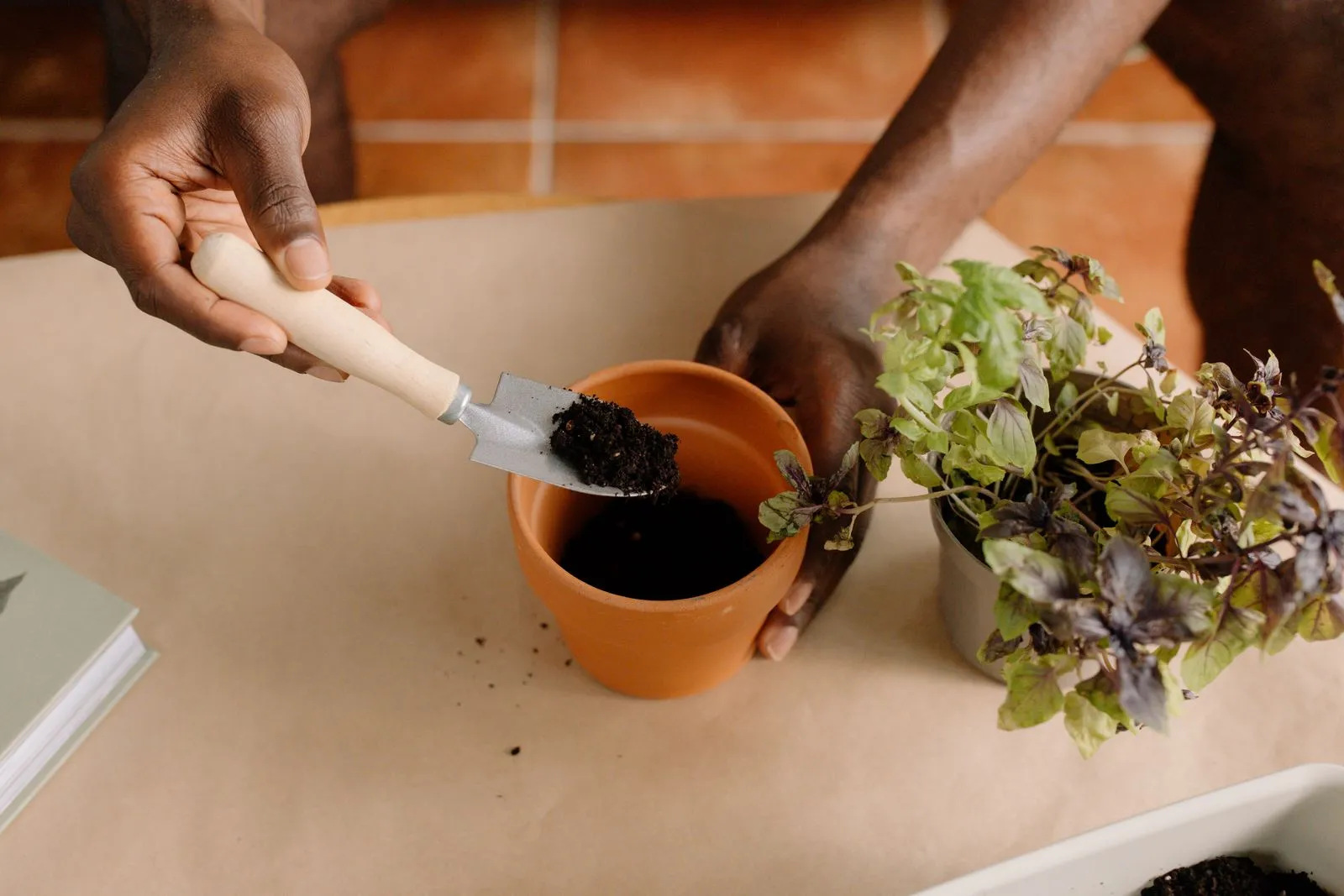
Then drain, and empty the saucer. Illinois Extension’s instruction is to soak the soil thoroughly, allow the excess to drain through to the saucer, and then empty the saucer, with the flat warning not to allow the pot to sit in a saucer of water. The RHS explains why in one sentence: if plants are allowed to sit in water for long periods, the air spaces in the soil are replaced with water and the roots drown.
Watering from the top is the method that flushes the pot. Water drawn up from below never passes through the mix, so it carries nothing out with it. Illinois describes that bottom-up approach as sub-irrigation: stand the pot in a few inches of water in a sink or saucer, and take it out when moisture shows at the surface.
It is useful for a plant that is hard to reach, or a mix that has gone crusty on top, but it should not be the only way you water a plant all year. It is also the part of how to water houseplants that most people skip: when to water houseplants is only half the decision, and the pour is the other half.
A seasonal watering table you can check against
Treat this as a set of starting gaps for a 6-inch pot in a typical home. It is guidance on when to water houseplants, not a set of rules to follow blind, so confirm every gap with the finger test. The column that moves these numbers most is not the month; it is how much light the pot actually gets.
| Season | Light the pot gets | Water every |
|---|---|---|
| Spring, growth restarts | Bright | 5–7 days |
| Summer, bright room | Bright | 3–5 days |
| Summer, dim corner | Low | 7–10 days |
| Early fall | Bright | 5–8 days |
| Late fall | Medium | 10–14 days |
| Winter, warm room | Medium | 7–10 days |
| Winter, cool room | Low | 14–21 days |
In every row the first check is the finger at two inches. In the two bright summer rows, lift the pot first, because those are the pots that surprise you: a 6-inch pot at 300 foot-candles can go from wet to dry in the time a dim-room pot barely changes.
Light is the variable most guides leave as an adjective, so here it is in numbers. Illinois Extension measures houseplant light in foot-candles: low light is about 75 foot-candles, which is a north window a few feet away, an east or west window three to ten feet in, or a south window fifteen to twenty feet into the room. Medium is 150, bright is 300, and direct sun at a south window is around 1,500. A pot at 300 foot-candles is using water several times faster than one at 75 in the same room, on the same day, in the same month.
Two things change the row you pick, and both are worth knowing before you write down a houseplant watering schedule. Pot size: a 10-inch pot holds roughly three quarts of mix against about a quart in a 6-inch pot, so it dries far more slowly. Pot material: plants grown in unglazed clay need watering more often than plants in plastic or glazed pots, because the clay is porous and evaporates through its walls.
The potting mix decides how long a watering lasts
Two identical pots on the same shelf can run different schedules because of what is in them. Clemson’s guide is the clearest on this: heavy, fine-textured potting media, and mixes with a lot of peat moss, hold more moisture than loose, porous mixtures of bark, sand and perlite. A mix that holds water like a sponge turns a weekly check into a check every two weeks, and it also raises the odds of the slow rot in the previous section. It changes how to water houseplants more than any gadget you can buy.
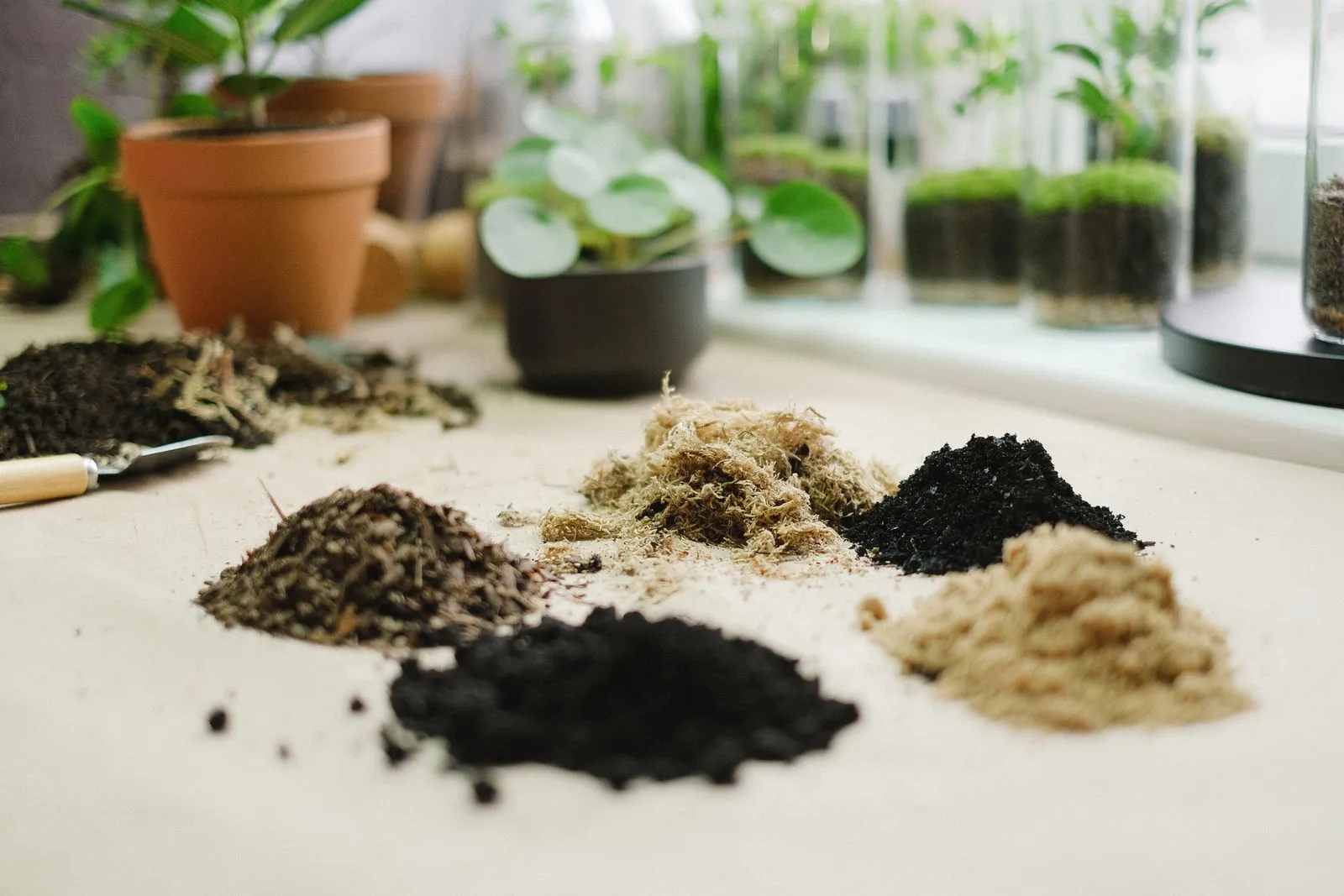
There is a second trap in peat, and it explains a plant that seems to have changed personality. Clemson notes that if peat is allowed to dry completely it is not only difficult to rewet, it also will not hold as much water as it could before it dried.
So a plant that once went three weeks without attention and now dries out in five days is not being difficult. Its mix has been restructured by one hard dry-out, and it will need water more often from then on. The double watering in this article’s pour section gets that plant drinking again; it does not restore the mix. If your plants are in a mix that has gone compacted, the recipe for a more open one is in potting mix and compost, and it is worth repotting in spring rather than fighting the old mix all year.
When to water houseplants: build a check, not a schedule
A houseplant watering schedule is a reminder to walk the room, not an instruction to pour. That is the official position of every extension service here, in slightly different words: Illinois says water plants when they need it and not according to the calendar, the RHS says do not water routinely but check that the pot needs water first, and Clemson says flatly that there is no pat answer to how often you should water.
So the working version of a houseplant watering schedule is a route through the house, not a timetable on the fridge. Pick one day a week. Walk the same path through the house, and at every pot do the same three things: two fingers into the mix, a lift, and a check of the saucer. Water the ones that come back dry at depth and skip the rest. Fourteen pots take me under ten minutes, because the pots that pass the finger test are done in three seconds each. That is a houseplant watering schedule short enough to keep. It also settles, one pot at a time, the whole question of when to water houseplants.
Keep a note of the outliers, because they are where the routine earns its place. Small pots dry first, unglazed clay dries faster than plastic, and anything in a bright window dries faster than the same plant six feet back. Those are the pots worth testing twice a week in summer, and writing them down is the difference between a houseplant watering schedule and a wish. The big plastic pots in a dim corner are the ones to test every two weeks, and they are also the ones most often overwatered by a routine that treats every pot the same.
Watering in winter, when the room lies to you
Winter sends two signals in opposite directions, which is why so many plants are lost between December and March. The RHS notes that pots dry out faster in winter when the humidity in the air is lowered by central heating — and in the same guide, that plants in a cool room need watering less often than plants in a warm room. Both are true. The warm room dries the mix from above, the cool room slows the plant below, and a houseplant watering schedule written for one will be wrong in the other.
So the answer for winter is not to water less. It is to check more often and pour less, because when to water houseplants in a warm room is a different question from when to water them in a cool one.
Temperature of the water matters more in winter than in summer. The RHS warns that cold water can kill, particularly in winter, and Clemson gives a working range of 62 to 72°F — roughly room temperature to slightly cool. Water taken straight from a cold tap in January is the easiest mistake to make and the easiest to avoid: fill the can and leave it out.
Windowsills are the other winter trap. A plant that loves a south window in July is sitting against glass that drops close to freezing on a clear night, and cold wet roots rot faster than warm wet roots. Move pots a foot in from the glass in December and back out in March. And do not stop watering entirely, whatever a winter houseplant watering schedule says: the RHS notes that in winter houseplants can be left for a week or two without water as long as the room stays cool, which is a statement about how slowly a cool plant drinks, not permission to abandon it.
Water temperature, hardness and softened water
Three questions come up every time this topic does, and the sources answer all three. None of them changes when to water houseplants; they change what comes out of the can.
Temperature. Room temperature is the standard, from both Illinois and the RHS, and Clemson gives the range: 62 to 72°F. Cold water shocks roots; hot water is worse.
Chlorine. Tap water is fine for most houseplants, with one step: let it stand in an open container for at least 24 hours so the chlorine dissipates, as both the RHS and Illinois advise. The University of Maryland Extension suggests drawing water the day before you plan to use it and discarding the bottom inch or two, which also lets minerals settle.
Softened water. Do not use it. Illinois says to avoid softened water; Clemson warns that sodium and chloride from a softener are added to the soil mix; the RHS is blunter, calling the salts in domestic water softeners highly toxic to plants. If your house has a softener on the main supply, fill your cans from an unsoftened tap, or from rainwater, which the RHS recommends for plants that dislike hard water. No houseplant watering schedule can rescue a plant that has been watered with softener salt for a year.
The four ways a watering goes wrong, and what each one costs
Four failures account for most of the houseplant deaths caused by watering, and two of them are versions of overwatering houseplants. Each one has a different bill attached.
Overwatering houseplants by frequency. Lower leaves yellow first, then the base of the plant goes soft, and the mix stays damp for a week or more. Clemson’s warning about the shared symptoms is the reason this one runs so long before it is spotted. The cost is root loss. A plant can usually be rescued by cutting away the soft roots and repotting into fresh gritty mix, but it loses a season of growth.
Underwatering, and the rewetting failure that follows. Crisp tips, drooping leaves, and mix pulling away from the sides of the pot. The cost is not just the current wilt. A hard dry-out changes the mix, as above, so a plant that survives one drought often needs watering more often for the rest of its life in that pot. When to water houseplants stops being a fixed number for that pot after the first drought.
Standing water. A cachepot without a hole, a saucer nobody emptied, a pot whose drainage holes are blocked by a saucer pressed flat against them. This is the fastest route from healthy to rotting, and it is entirely invisible from above the rim. It is also the most common form of overwatering houseplants, and the one a plant never corrects on its own. The fix is a plain plastic nursery pot inside the decorative one, lifted out to water at the sink.
Salt build-up. Maryland Extension describes the ring of white crust at the soil line, the brown leaf tips, the reduced growth and the wilting that come from fertilizer salts concentrating in the mix as water evaporates. The remedy is to leach the pot with clear water every four to six months, using at least twice the volume of the pot, and to do it before you feed rather than after. It is the one job on this list that a thorough top watering does for free, which is another argument for soaking rather than sprinkling.
Reading which of the four you have is often a matter of looking at where the damage sits on the plant; what the damage on a plant’s leaves is telling you takes that further than a watering guide can.
Overwatering houseplants: the pot is usually the real culprit
Overwatering houseplants is rarely about the can. It is about the container, and there are three versions of the problem: no drainage hole, which leaves water nowhere to go; too large a pot, so a small root ball sits in a lot of spare mix that stays wet for weeks; and a mix that has broken down into something closer to compost than to potting soil, holding water it cannot pass on. Each of the three is overwatering houseplants in slow motion, and a corrected routine that keeps going wrong is nearly always one of them. That is why pot size and drainage are worth more of your attention than watering technique.
On pot size, the useful arithmetic is volume, not diameter. A 6-inch nursery pot holds roughly a quart of mix and a 10-inch pot roughly three quarts, so a plant moved up two sizes is sitting in three times the water it was before. That is why the standard advice is to move up one pot size at a time, in spring, rather than into the decorative container you liked in the shop.
Terracotta is the useful counterweight for a plant that stays damp: it evaporates through its walls, so it dries faster than glazed ceramic or plastic holding the same mix. The pot does not fix an overwatered plant, but it shortens the window in which the roots are sitting in water. A plant in a cool, dim room is the case where that matters most — and if the room, rather than the routine, is the problem, the plants to choose for it are set out in houseplants for a dark hallway.
A windowsill and balcony routine that survives a busy week
I keep fourteen pots: six on windowsills, eight on a rented balcony that gets sun until about two in the afternoon. The balcony pots dry out roughly twice as fast as the windowsill ones in July, which is wind as much as sun, and the difference is big enough that they cannot share a check day.
So the balcony gets checked twice a week in summer, on the same two days, and the windowsills once. I fill a two-gallon can, water the pots that pass the finger test, and leave the can half full by the door so the next check starts with water at room temperature. In winter the routine reverses: the balcony pots come inside or get moved against the wall, and the indoor pots get checked more often than in summer because the heating is on.
The mistake I made, and it cost me a plant, was treating a schedule as a promise. In my first summer here I watered all fourteen pots on Sunday because that was the day, and by August three of them had yellow lower leaves and soft bases. Two recovered after two weeks of nothing. The third did not. Fourteen pots, three casualties, one rule learned: the day is for checking, and the plant decides.
The five-minute version
Check the mix two inches down. That is the whole of when to water houseplants, and the rest is technique. If it is dry, soak the pot until water runs out of the bottom, wait thirty minutes, soak again, then empty the saucer. If it is damp, walk away and come back on the next check day. Match the gap to the light the pot actually gets, expect it to halve in summer and double in a cool winter room, and treat any pot that stays wet for a week as a container problem rather than a watering problem.
That is how to water houseplants without ever guessing at a number again, and it is the short answer to when to water houseplants too: the pot knows, and the calendar does not. It works on a pothos in a bright kitchen and a snake plant in a dim hallway, and the reason is the same in both rooms: roots need air between drinks. If you are working through a plant that has already gone wrong, snake plant care shows the same three readings applied to the most forgiving plant in the house, and more guides for indoor growing sit under Plants and Care.
QUESTIONS GARDENERS ASK
Common questions
How often should I water my houseplants?
There is no fixed number, and extension services say so directly. Water when the mix is dry about two inches down, which in a bright summer window can be every three or four days and in a dim cool corner can be every two to three weeks. Light, pot size, mix and season set the pace.
Should I water houseplants on a schedule?
A schedule is a reminder to walk the room and test, not an instruction to pour. Pick one day a week, check the soil in each pot, and water only the ones that come back dry. A houseplant watering schedule that ignores the mix is how most plants get overwatered.
How much water should I give a houseplant?
Enough that it runs out of the drainage holes, given in two passes about thirty minutes apart. The second pass is what soaks a shrunken root ball, because very dry mix repels water at first. Then empty the saucer.
Can you overwater a houseplant without drowning it?
Yes. Repeated light waterings keep the mix damp at the top while the bottom two-thirds of the pot, where most roots sit, never gets properly wet or properly aired. Overwatering houseplants this way produces a plant that looks thirsty and rots from below.
Why are my houseplant leaves turning yellow from the bottom up?
Bottom-up yellowing usually means the roots have been wet for too long and cannot take up oxygen. Leave more time between waterings rather than giving less water per watering, and check that the pot actually drains.
Can I water houseplants with tap water?
For most common houseplants, yes, at room temperature. Let it stand in an open container for about 24 hours so the chlorine dissipates, and never use artificially softened water, because the salts in it are toxic to roots.
Should I water houseplants from the top or the bottom?
Both work. A top soak is the only method that flushes accumulated salts out through the drainage holes, so it is worth doing most of the time. Bottom watering suits small pots and avoids wetting the leaves, but water drawn up from below never passes through the pot and carries nothing away.
Why is my plant wilting when the soil is wet?
Because wilting is not proof of thirst. Roots sitting in saturated mix lose the oxygen they need, stop taking up water, and the plant collapses exactly as it would in dry soil. Test the mix before you water a wilted plant, or you will water a drowning root system.
Sources
- Illinois Extension — Houseplants: watering
- Illinois Extension — Houseplants: lighting
- Clemson HGIC — Indoor plants: watering (HGIC 1459)
- University of Maryland Extension — Watering indoor plants
- RHS — How to grow houseplants
- Loreti & Perata, Plants 9(6):745 — The many facets of hypoxia in plants (PMC7356549)
 Plants & Care
Snake Plant Care: 5 Simple Rules From 4 Years of Growing
Snake plant care without guesswork: how often to water in summer and winter, why leaves droop, when to repot, and how to propagate a plant you already own.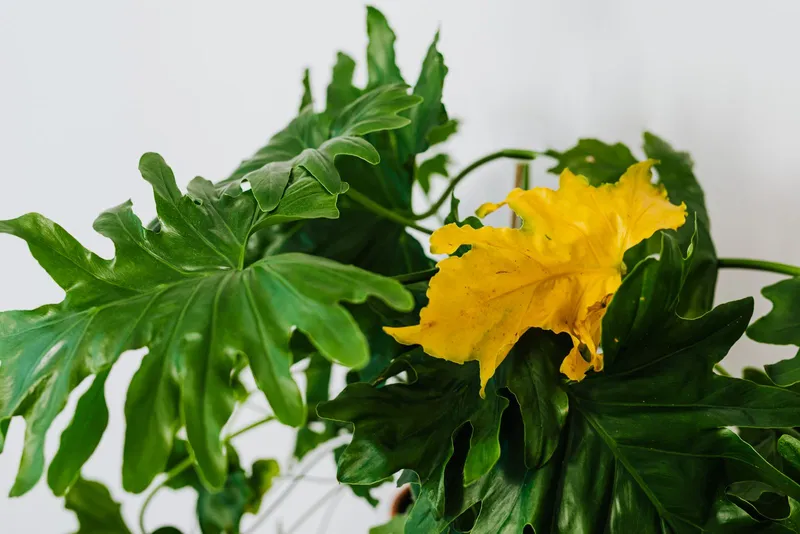 Plants & Care
Yellow Leaves on Plants: 5 Causes and a Simple Test
Yellow leaves on plants are a diagnosis, not a verdict: five causes worth checking, from waterlogged roots to iron locked by pH, and a test that separates them.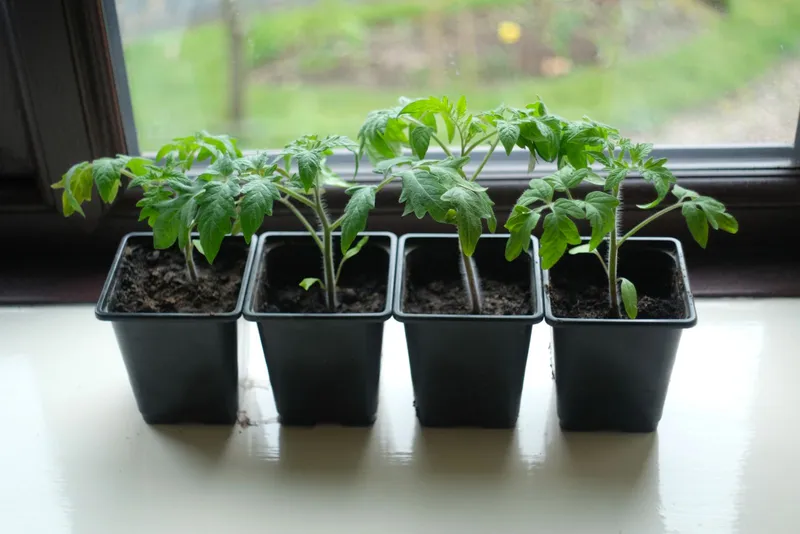 Plants & Care
When to Start Seeds Indoors: A Simple 2027 Calendar
When to start seeds indoors is arithmetic: count the packet's weeks back from your last frost, then use the 2027 calendar by USDA band to fix the sowing date.Reading us often? Add MyGreenyGarden as a preferred source on Google and our guides are more likely to be highlighted when you search.