Small Patio Garden Ideas: 7 Simple Rules Under 200 Sq Ft
Small patio garden ideas for patios under 200 square feet: floor-plan arithmetic, wind-proof pots, foot-candle shade, and seven rules in the order they fail.
Key takeaways
- Budget the floor in feet before you buy anything: a 36-inch table with a chair pulled out needs about 8 feet across, and that is 64 square feet for two people to eat.
- Wind topples the plant, not the pot. Square or straight-sided pots with a base wider than the pot is tall stay up; tapered pots are the ones that go over.
- Larger pots need less frequent watering than smaller ones, but a pot much too big for its plant stays wet and rots the roots. Three pots of 18 to 20 inches beat nine of 10.
- Read the shade in foot-candles and in hours of direct sun, at 9, 12 and 3, before you buy a plant for a wall that gets none.
- A patio becomes a room when something tall stands between the seat and the fence, and when the seat is turned to face it.
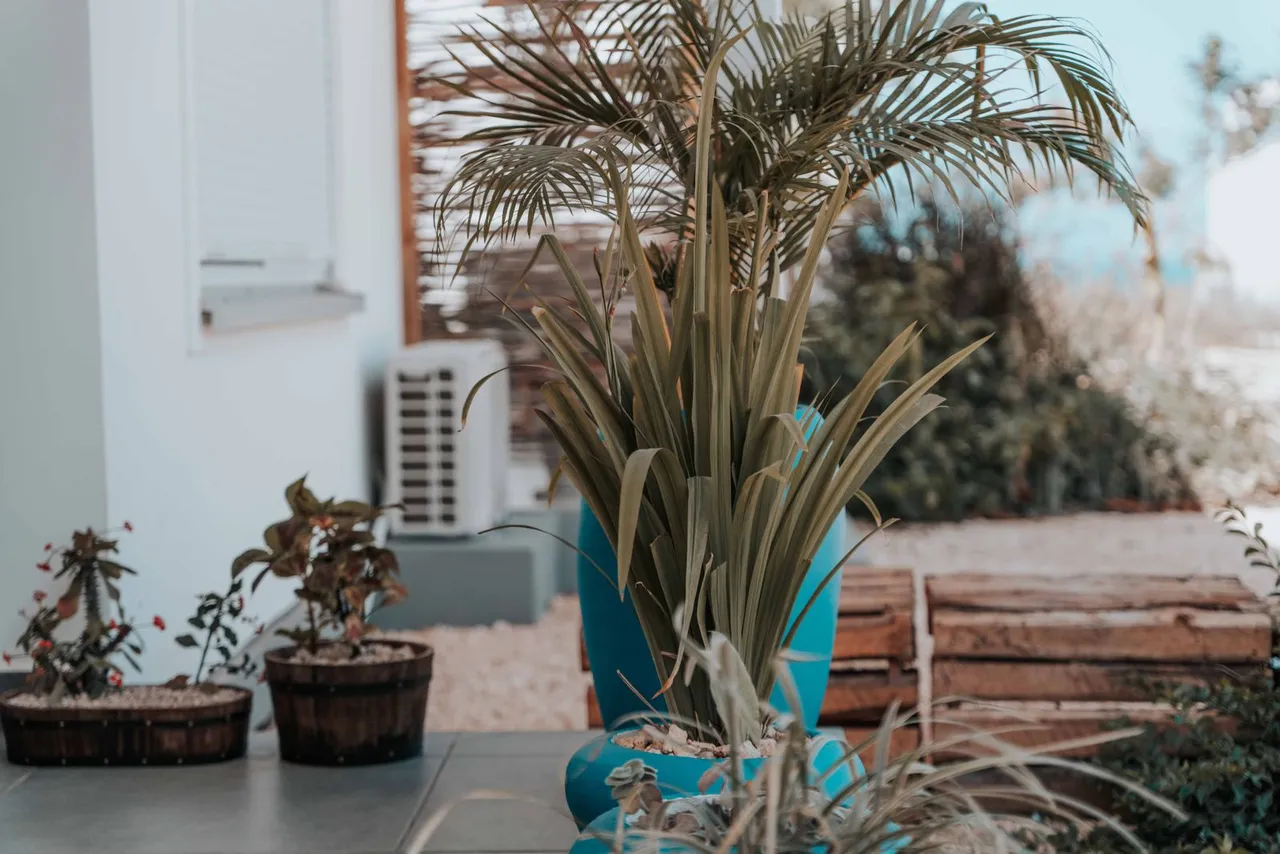
A small patio garden works like a room with a floor plan, not like a lawn with pots standing on it. The small patio garden ideas that actually change a paved corner are arithmetic: how much floor a chair needs, how much a strip of planting costs in square feet, and which pot shapes stay upright in a gust. Seven decisions, in the order they usually go wrong — floor plan, wind, shade, pot size, a wall of green, where the seats point, and water. Get those right and the styling looks after itself.
I garden on a paved patio of about 150 square feet, with two walls and one open side, and everything below has survived at least one summer out there. Treat it as patio garden design done with plants instead of structure: the pots take the job a fence and a hedge would do in a bigger yard, and the paving does the job a floor does indoors. Small patio landscaping is mostly that substitution — structure borrowed from plants rather than built.
Start with the floor plan, not the plants
Measure the patio before you buy anything, because the floor is the real constraint. A patio of 200 square feet or less is usually a 10 by 20 foot strip, a 12 by 16, or a 14 by 14 square, and those three shapes take completely different furniture even though the area is almost the same.
Then budget the floor in feet, not in taste. A 36-inch table with a chair pulled out needs about 8 feet across, because a chair wants 2 feet 6 inches of clear space behind it on each side. That is 64 square feet of floor for two people to eat at. A planting strip 2 feet deep along one 10 foot edge claims another 20 square feet, and a 3 foot path down the middle of a 20 foot patio claims 60. Add those up and 144 of your 200 square feet are already spoken for, which leaves room for a second chair or a bench and nothing more.
That is small patio landscaping in one paragraph: not fewer plants, but a floor where every zone has a job. Every workable list of small patio garden ideas starts here, with a tape measure rather than a photograph, because patio garden design is mostly the arrangement of the floor you already own.
| Footprint, sq ft | What fits without crowding | The mistake I see most |
|---|---|---|
| 10 × 10 ft (100) | A bistro table, two chairs, three pots along one edge | A six-seat dining set |
| 10 × 20 ft (200) | A 36-inch table, four chairs, a 2 ft planting strip | A path under 3 ft wide |
| 12 × 16 ft (192) | The same, plus a bench and a barbecue | Pots on all four edges |
Small patio garden ideas that stay upright in wind
Wind decides more of this than the design does. Illinois Extension’s container guide is blunt about the mechanism: a container has to be stable enough not to tip as the plants grow, square pots are the most stable, straight-sided pots come next, and traditional tapered pots tip over easily. A pot whose base is narrower than its top is a lever with a plant on the end of it, and the taller the plant, the longer the lever. In small patio landscaping the corners fail first, because that is where the wind gets under a pot.
The fixes cost nothing. Put the tallest planting against a wall rather than on the open corner, group pots so they touch shoulder to shoulder and brace one another, and choose a pot with a base wider than the pot is tall. The same guide suggests strapping or anchoring any plant that has become top-heavy, and warns that small pots go top-heavy first as the plant outgrows them. On a patio that catches a crosswind between two buildings, that advice saves a season.
My own expensive lesson was a 4 foot ornamental grass in a tapered 14 inch pot on the windward corner. It went over twice in one week last spring and cracked at the rim on the second one. The grass was fine; the pot was the wrong shape, and it took me a month to admit the plant had nothing to do with it.
Wind is a second sun as well. It strips water from leaves and off the surface of the mix, so a windy patio dries faster than a sheltered one with identical sun. Wind is also the part of patio garden design that cannot be fixed later with a cushion. Any list of small patio garden ideas that ignores wind is a list written for somebody else’s yard.
Read the shade before you buy a plant
Shade is the number people guess, and it is the one that kills plants. Illinois Extension puts figures on the words: about 75 foot-candles is low light, 150 is medium, 300 is bright, and direct sun at a south window is around 1,500. Those readings come from a houseplant guide written for plants behind glass, so an outdoor patio will beat them on a sunny afternoon and fall well below them in the shadow of a wall — but the scale is still the right one to judge a corner by.
The table below is that scale read against a patio: the foot-candle bands are Illinois Extension’s published figures, and the planting in the third column is what has survived each band on my own paved patio.
| Band | Foot-candles | What suits that corner |
|---|---|---|
| Low | 75 | Ferns, hostas and foliage, in the strip against the north wall |
| Medium | 150 | The same foliage mix where a low wall lets a little sky in |
| High or bright | 300 | Herbs and flowering annuals, which sulk below this |
| Direct sun | 1,500 | Rosemary, lavender and the tomato pot |
Outdoors, Illinois Extension puts full sun at 10,000 to 12,000 foot-candles, which is worth knowing when a patio corner measures 300 and feels bright: it is a tenth of what the open sky delivers, and the plants know the difference.
So measure instead of guessing. Stand on the patio at 9 in the morning, at noon and at 3 in the afternoon on a clear day, and note which parts of the floor are in sun. I measured my own patio in June and got roughly four hours of direct sun on the seating area and none at all on the strip against the north wall. That is why the pots along that wall hold ferns and hostas rather than rosemary, which wants the sunniest spot I have.
Two things shift the answer across a year. The sun sits higher in summer and lower in winter, and a deciduous tree or hedge gives shade in July and lets light through in December once the leaves are down — which is exactly what you want beside a patio you use in both seasons. Measure in the season you plan to use the room most, then check the other season before planting anything permanent. Most lists of small patio garden ideas assume six hours of sun; most patios have less, and that is why shade is step three of patio garden design and the step most often skipped.
Choose three big pots, not nine small ones
Pot size is where a small patio garden is usually lost, and it is lost in both directions. Illinois Extension states the first half plainly: with the same plants in the same place, larger pots need less frequent watering than smaller pots. The same page gives the other half — a pot much too big for its plant stays wet for longer, and root rot becomes likely. Big enough to hold water through a hot afternoon, not so big that the roots sit in it.
Do the volume arithmetic once, because it explains why sizes feel so different in practice. A pot 16 inches across and 14 inches deep holds about 2,800 cubic inches of mix, and 231 cubic inches make a gallon, so it holds a little over 12 gallons. The same pot at 20 inches across and 16 inches deep holds about 22 gallons. That is not half again as much: it is nearly twice the root volume, which is the difference between watering daily and watering every second or third day.
Three pots of 18 to 20 inches will do more for a patio under 200 square feet than nine pots of 10 inches. They hold enough mix to ride out a hot afternoon, they are heavy enough to stay where you put them, and they read as objects rather than clutter. Group them in odd numbers and vary the heights, which is the same advice Illinois Extension gives for landscaping with containers, and it is the move that most improves patio garden design at this scale. Most small patio garden ideas go wrong here, in a shopping cart full of 10 inch pots.
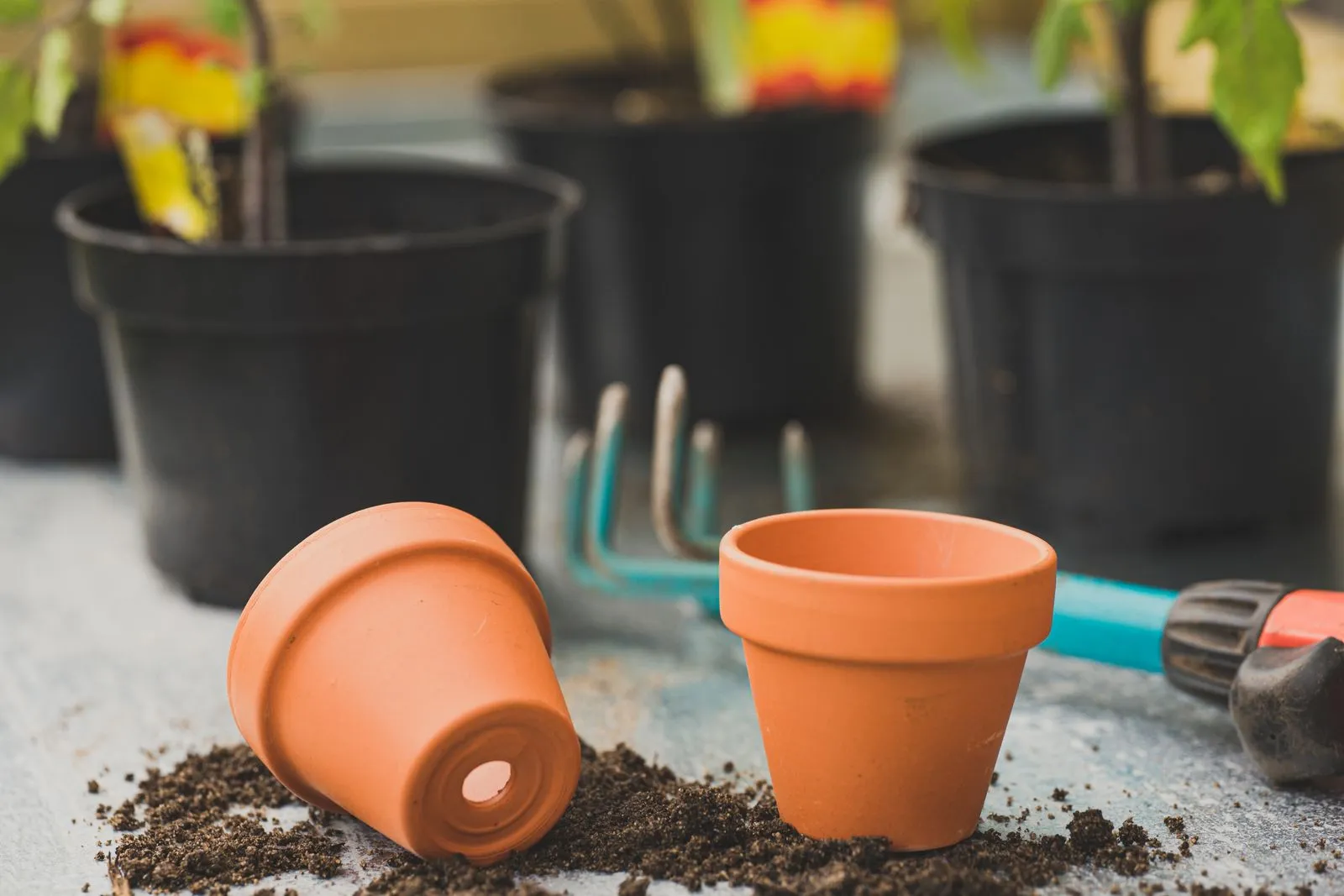
Photo: Ylanite Koppens via Pexels
Give the patio a back wall of green
A patio with two open sides never quite feels like a room, because there is nothing for the eye to stop against. Illinois Extension makes the point about grouping: containers set together on a porch, balcony or patio soften what may be a very stark, open space, and can make the place feel like a refuge. That is the whole trick — the pots are the wall, and you build the wall in three heights.
A structural plant 4 to 6 feet tall at the back sets the ceiling line: a small tree, a clipped shrub, or a tall grass in a 20 inch pot. A middle rank at 2 to 3 feet gives the eye something at seated height. A front rank of low or trailing plants covers the pot rims and hides the join between pot and paving, which is where a pot group usually looks staged rather than planted. Illinois Extension suggests raising some containers on overturned pots or bricks to vary the heights without buying anything new.
Vertical space is the part of a small patio that is genuinely free, so let the climbers use it. A trellis fixed to the wall, with a climber in a 20 inch pot at its foot, adds green at eye level without spending an inch of floor. The RHS lists shrubs, climbers, herbaceous perennials and even small trees as container-worthy, which is a much wider palette than most patio articles admit. Height at the back, interest at seated height, cover at the front: that is the structure behind most good small patio garden ideas, and it costs three pots.
Seats should face something growing
If I could keep only one rule of patio garden design it would be this: no chair with its back to the garden. Sit in every seat and look at what you can see. If the answer is a fence, a trash can or the side of the house, the room is not finished, whatever the pots look like.
Two moves fix it, and both are cheap. Move the seat, or plant the view. Turning a chair 90 degrees to face a pot group reads as a deliberate arrangement, and it costs nothing. Planting the view means one tall pot in the middle distance, which is what the back wall in the section above is for. In small patio landscaping this is the cheapest improvement available, because it needs one turn of a chair and no shopping.
Then check the same view from inside the house. You decide whether to use a patio by looking at it through a door or a window, usually in the evening, and a space that looks good from the sofa gets used. If the last thing you see before deciding to go out is a bare slab and a trash can, you will stay in.
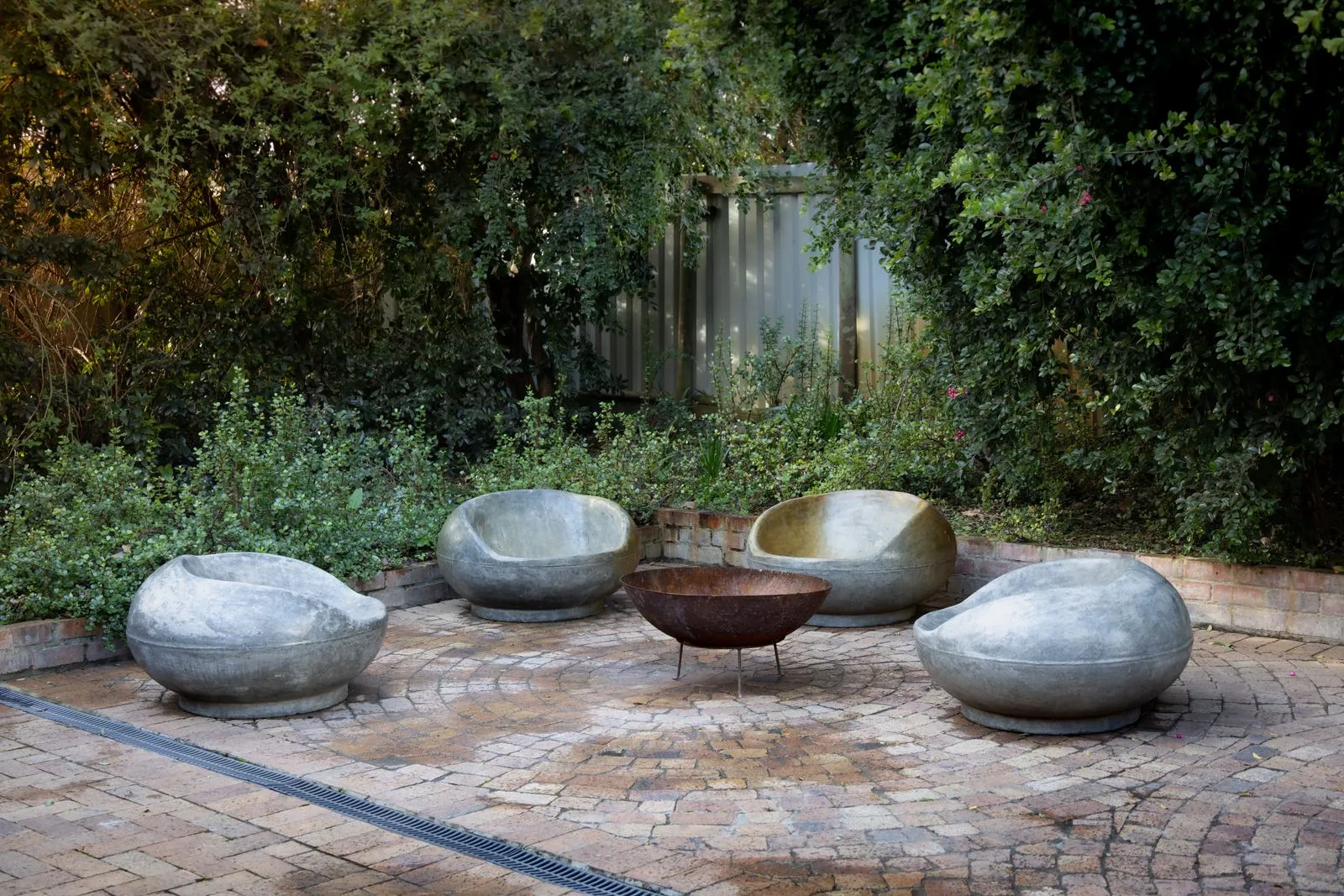
Photo: Magda Ehlers via Pexels
Watering a patio that bakes
Containers outdoors lose water from every side, and paving makes it worse by bouncing heat back up into the pot. Illinois Extension’s watering guide puts the baseline plainly: containers dry fast, watering on a daily basis is necessary to provide adequate moisture, and there are no hard and fast rules, because the answer depends on the season, the site and the pot. Last summer I watered the sunny pots twice a day through the hottest two weeks and the shaded ones every third day, and both schedules were right for where they stood.
Three habits cut the work. Mulch the surface of every pot with an inch of bark or gravel, which slows evaporation and keeps the root zone cooler. Water in two passes — soak until it runs from the drainage holes, wait five minutes, then soak again — because Illinois Extension notes that dry soilless mix shrinks away from the pot edge, and the first pass mostly runs down that gap. Then empty the saucer, since a pot standing in its own runoff is being watered twice, and the second time is the one that drowns it.
The RHS makes the same point from the other direction: plants in containers need more watering and feeding than plants in the ground, because they have only a small volume of compost to draw on. That is not a reason to avoid pots. It is a reason to choose three big ones that sit where the hose reaches, and to stop buying small ones on impulse. Water is the part of small patio landscaping that nobody plans in May and everybody plans in July.
Soil, drainage and the winter saucer
Drainage is the difference between a pot that survives and one that drowns. The RHS container guide calls drainage holes essential and notes that containers are prone to waterlogging in winter, when the plant is using almost nothing and the rain keeps coming. Terracotta is porous, so it dries faster — helpful in a wet season, a chore in a dry one. Plastic holds moisture and weighs less, which matters if the pot has to stand its ground in wind.
Winter is where a small patio garden is lost quietly. The RHS points out that roots in a pot are more exposed to cold than roots in the ground, so a container plant may need protection a border plant does not. My own mistake was leaving the saucers on all winter: the pots sat in cold water for weeks and two of them cracked at the base.
The fix is a 20 minute job in late fall. Tip the saucers out, move the pots a foot closer to the wall, and stand them on feet or bricks so water runs away instead of pooling underneath. Do it on the same day you empty the last tomato pot and it becomes a habit rather than a project. It is the half of patio garden design nobody photographs, and the half that decides which pots are alive in March.
What to plant: three slots, not a shopping list
Choose by slot rather than by plant, because the slots are what make a small patio look designed rather than collected. One structural plant, one with a long season of interest at seated height, and one that spills over a rim. Repeat the same three plants in more than one pot and the space reads as a scheme, which is small patio landscaping by repetition rather than variety.
The RHS is encouraging about range: almost any plant can be grown in a container, from seasonal bedding to shrubs, climbers, herbaceous perennials and even small trees, with drought-tolerant plants such as Mediterranean herbs doing especially well in pots. Vegetables work too — the method for a productive pot is in growing kale in pots, and the same arithmetic of pot volume applies to anything you intend to eat. Most small patio garden ideas arrive as a plant list; three slots is what makes the list finite.
Small patio landscaping on a budget
Nothing here needs a builder, which is the point of the cheaper end of small patio garden ideas. The most expensive-looking change on a small patio is usually the cheapest: three large pots grouped against a wall, mulched, with something tall behind them. Small patio landscaping is about repetition and weight rather than quantity, and second-hand terracotta looks better the more weathered it gets.
Spend in this order. First on the biggest pot you can lift, because it solves watering and stability at the same time. Second on one structural plant that will live for years. Last on annuals, which are the cheapest thing to change and the least important to get right the first summer. The order matters more than the total: a small patio landscaping budget spent on pots first and annuals last goes further.
What you can skip on a patio this size: a pergola, a lawn, and any plant you have to water twice a day in a pot you cannot move. The rest is one afternoon of measuring and a trip for pots.
Mistakes that cost me a season
Three, in the order I made them.
Nine small pots. They looked like a collection in May and like a second job in July, because every one needed water daily and three still dried out. Fewer, larger pots fixed both problems and made the patio look bigger, which is the opposite of what I expected.
A tapered pot under a tall plant. Illinois Extension names the shape as the least stable, and I can confirm it from the paving: the lever above the rim is what goes over, not the pot itself. A straight-sided pot of the same volume has never fallen in four years.
Buying for the plant I wanted rather than the light I had. A sun-loving herb in the shade of a north wall sulks for a month and then dies, and no amount of feeding rescues it. Now the shady strip gets foliage and the sunny corner gets the herbs, and both are easier to keep. None of the three is unusual; they are the standard ways a plan built from small patio garden ideas falls apart in its first summer.
A patio is a habit, not a project
None of this is expensive or complicated: measure the floor, read the shade, choose three big pots, put a wall of green at the back and turn the seats toward it. Water is the routine that keeps it alive, and everything else is a decision you make once.
The test is the same one it has always been. If you carry a cup of coffee out there in the morning without thinking about it, the small patio garden ideas were the right ones. More guides for tight spaces live under Small Spaces, the same approach to a container — fewer, bigger, better sited — is in a balcony garden in a window box, and the instinct for floor area that drives all of this patio garden design is what makes taking back the hard-to-mow edges of a yard work at garden scale.
QUESTIONS GARDENERS ASK
Common questions
What are small patio garden ideas on a budget?
Group three large pots against a wall, raise one on a brick so the heights differ, and mulch the surface of each pot. Nothing there needs a builder, and second-hand terracotta looks better weathered than new. Spend first on the largest pot you can move, then on one structural plant, and leave annuals for last because they are the cheapest thing to change.
How do I make a small patio look like a garden?
Give the eye a wall of green to stop against. Put the tallest planting at the back edge, in a pot with a base wider than it is tall, and add a middle rank at seated height and a low rank that covers the pot rims. Then turn every seat to face that planting rather than the house or the fence, because a chair facing a fence is what makes a patio read as leftover space.
How many pots should a small patio have?
Fewer and bigger than you expect. Three pots of 18 to 20 inches will do more than nine of 10 inches, because each holds enough mix to ride out a hot afternoon and enough weight to stay upright. Group them in odd numbers, vary the heights, and repeat the same three plants in more than one pot so the space reads as a scheme.
What can I grow on a small patio in shade?
Measure the hours of direct sun first, then choose for that number rather than for the plant you like. Illinois Extension's scale puts 75 foot-candles at low light, 150 at medium and 300 at bright, and a wall in permanent shadow sits at the bottom of it. Ferns, hostas and foliage plants work in the deepest corner; herbs and flowering annuals need the 300 end or better.
How do I stop pots blowing over on a patio?
Change the shape before you change the plant. Illinois Extension rates square pots as the most stable, straight-sided cylinders next, and traditional tapered pots as the ones that tip easily. A base wider than the pot is tall helps, grouping pots so they brace each other helps, and any tall plant that has gone top-heavy should be strapped or anchored.
What do you put on the floor of a small patio?
Something that marks the seating zone without pretending to be a lawn. An outdoor rug rated for wet weather is the cheapest marker, and a strip of gravel or bark with stepping stones between the door and the chairs does the same job permanently. Leave at least 3 feet of clear path, because a narrow path is what makes a small patio feel cramped.
How often do you water a patio garden?
Expect to water at least daily in summer, which is what Illinois Extension gives as the baseline for containers, and twice a day for a pot in full sun during a heat wave. Bigger pots buy you time, mulch slows evaporation, and watering in two passes a few minutes apart soaks the rootball instead of running down the inside of the pot.
Can you grow vegetables on a small patio?
Yes, in pots sized for the crop rather than for the space. A kale plant wants a 5-gallon pot at least 12 inches deep, and a tomato wants more, so the constraint is pot volume rather than floor area. Two or three productive pots among the ornamentals usually fits a patio under 200 square feet.
Sources
 Outdoor Spaces
Growing Tomatoes in Containers: 5 Simple Rules for Pots
Growing tomatoes in containers works when the pot is measured in gallons: minimum pot volume, watering a small root zone, and varieties that fit a pot. Outdoor Spaces
How to Build a Raised Garden Bed: 6 Simple Steps
How to build a raised garden bed in one weekend: six steps from siting and lumber to a soil mix that drains, plus the 2027 dates to fill it by weather station. Outdoor Spaces
Tomato Plant Care: 7 Simple Rules for a Healthy Harvest
Tomato plant care in seven rules: how much sun and water a plant needs, when to prune, what causes blossom end rot, and a 2027 planting calendar.Reading us often? Add MyGreenyGarden as a preferred source on Google and our guides are more likely to be highlighted when you search.