Growing Kale in Pots: 5 Gallons and 4 Easy Cuts
Growing kale in pots, done properly: the 5-gallon rule, a cut-and-come-again harvest schedule that keeps plants cropping for months, and a 2027 calendar.
Key takeaways
- One kale plant wants a 5-gallon pot at least 12 inches deep, with 10 to 15 inches between plants if you grow more than one.
- Sow seed a quarter to half an inch deep and thin to a single stem at the three-leaf stage; crowded pots stay small.
- Cut two or three of the oldest lower leaves at a time and never take the growing tip: a 5-gallon pot gives four to six cuts across a season.
- Expect 50 to 70 days from sowing to the first real harvest, and water 1 to 2 inches a week, more in heat, because a pot dries from every side.
- In 2027, count backwards from your own last frost: sow indoors 6 to 8 weeks before it, direct-sow 2 to 4 weeks before it.
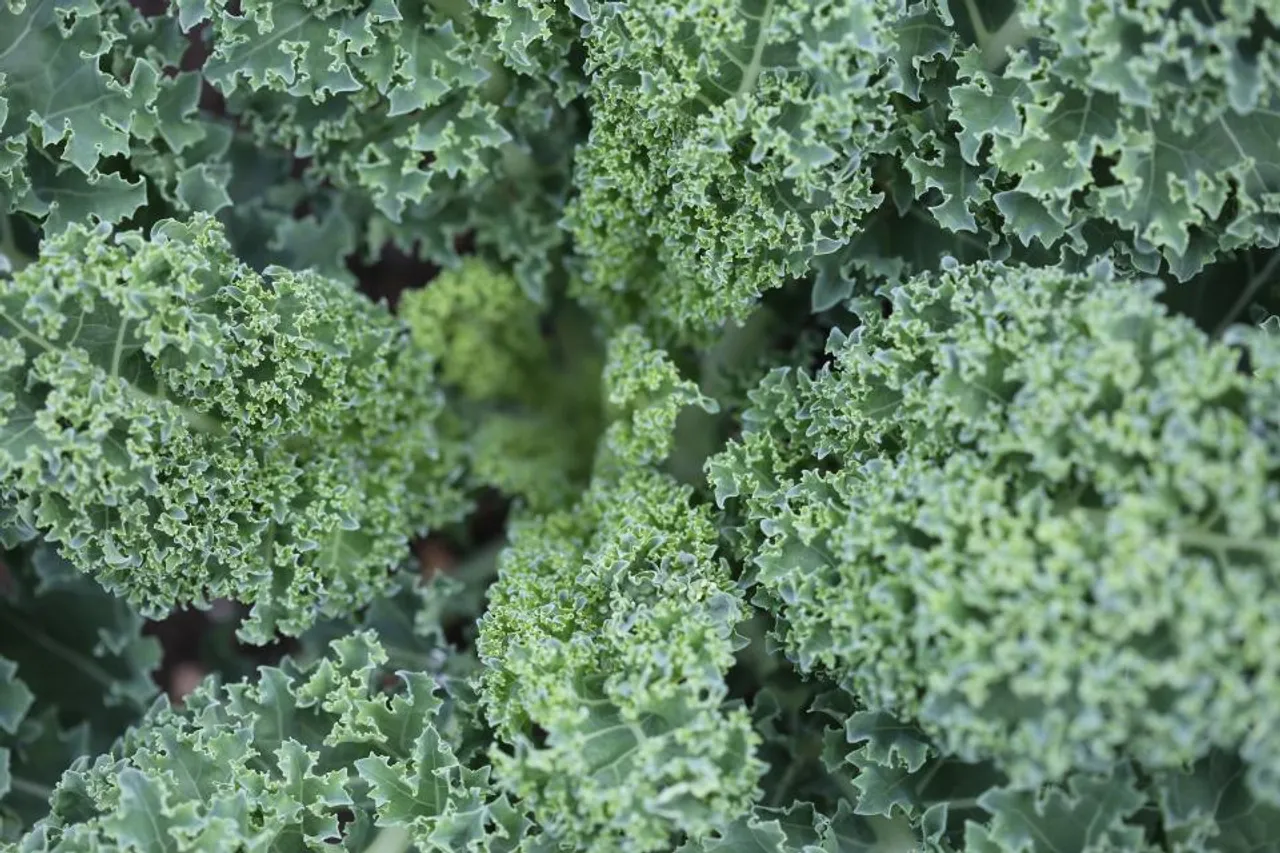
Growing kale in pots is the best return a vegetable can give on one square foot of concrete, and the easiest container vegetable garden to get right. Kale is grown for its leaves, so it never has to set fruit: no pollinator, no long hot summer, no staking. Its roots are shallow and fibrous, which means it does not care whether the soil column is four feet deep or twelve inches.
I have grown kale in 5-gallon pots on a windy second-floor balcony every season since 2019, and the pots that cropped into winter were never the ones with the best seed. They were the ones with enough mix, enough water and a pair of scissors used properly. That is the short version of everything below about growing kale in pots.
Why growing kale in pots works when other vegetables do not
A tomato in a pot is a negotiation. It wants a stake, a cage, a feed schedule and a summer that stays warm, and one bad week of blossom-end rot writes off the crop. Kale asks for none of that, because it is not trying to make fruit. Everything it builds goes into leaf, which is the part you eat.
That changes what the pot is for. In a bed you are managing soil; in a container you are managing a small water reservoir with roots in it. Kale container gardening is really the management of that reservoir, which is why the failures people report are so consistent: dryness, crowding, and a pot too small for the plant the seed packet promised.
The advantages are real. A container vegetable garden gives you one lever a bed does not: you can pick the spot up. A pot warms earlier in spring than ground soil, drains where your garden would puddle, and can be lifted onto a table out of slug range. Moving it is the underrated part. When a July heatwave hits, my pots go to the shaded side of the balcony for a week and the leaves stay tender instead of turning leathery.
The costs are equally real, and worth saying out loud. A container vegetable garden holds a finite bank of water and nutrients, so it can feed one cook, not a family. It freezes solid in a way soil never does. And it fails fast: a plant in the ground can look sad for two weeks, while a plant in a pot can go from fine to finished in two days.
The pot: 5 gallons, 12 inches deep, 10 to 15 inches apart
Five gallons per plant is the number to work from, and it is most of kale container gardening in one line: match the root volume to the plant. Virginia Cooperative Extension’s container table lists kale at a 5-gallon minimum, with 10 to 15 inches between plants and 55 to 65 days from seed to harvest. Wisconsin Extension splits container vegetables into a small class — two gallons, four to six inches deep, for leaf lettuce, spinach and radishes — and a larger class needing five gallons and 12 to 18 inches of depth. Kale belongs in the larger class once you are growing it for cooking rather than for microgreens.
What five gallons actually is: about 0.67 cubic feet, the size of a standard bucket, roughly 10 to 12 inches across the rim. Depth matters as much as volume, because kale’s roots work downward and a shallow bowl of the same volume dries out in a morning. Twelve inches is the floor; 14 is better and barely costs more mix.
Drainage holes are not optional and not something you fix with gravel. Wisconsin Extension is blunt about the old advice: do not put rocks or broken pot pieces in the bottom, because research shows a layer of coarse material impedes drainage rather than improving it. Water moves best through a continuous column of mix, so one hole is the minimum and three is better.
Material changes how often you water. Unglazed terracotta breathes and dries from the sides, which suits kale in a humid climate and punishes it in a dry one. Dark plastic heats up in full sun and can cook roots on a south-facing wall; a light-colored pot or a shade cloth over the root zone fixes that. Whatever you choose, remember that in a container vegetable garden the pot is the expensive part and the seed is the cheap part, so buy the 5-gallon pot once rather than three 2-gallon ones in sequence.
Potting mix, drainage and the layer you should not add
Fill the pot with potting mix, not garden soil: a container vegetable garden lives or dies on its mix. Wisconsin Extension’s description of a good mix is the one to judge a bag by: lightweight, high in organic matter, well drained, built from compost, peat or bark, perlite or similar. Garden soil in a pot loses its structure, compacts into something like brick, and drains badly exactly when you need it to drain most.
Kale is not fussy about pH but it does have a band. Clemson Extension puts greens at pH 6.0 to 6.5, and says to adjust fertility before planting from a soil test rather than guessing. In a container vegetable garden you have a shortcut: a fresh bagged mix is already near that band, so the pH question only matters if you are reusing mix or blending your own.
A slow-release fertilizer blended in at potting time saves you the first month of feeding, which in growing kale in pots is the month the plant can least afford to stall. Leave an inch between the mix surface and the rim, so you can flood the pot without washing the top inch of mix over the balcony.
If you want the full argument on what belongs in a container — peat versus coir, compost versus loam, why pure compost compacts — it is covered in potting mix and compost. For kale, the rule is simply that the mix must drain and must not be garden soil.
Sowing kale in a pot: two seeds, half an inch deep
Sow seed a quarter to half an inch deep. Clemson Extension is specific about the ceiling: seed planted deeper than half an inch likely will not germinate. Its recommended depth is a quarter to a half inch, in moist mix, kept damp until the seedlings are up.
Sow two seeds where you want one plant, then remove the weaker seedling. That is the RHS method, and it costs one seed to insure against a dud. Space the pair an inch apart so you are not tearing roots apart later.
Then thin properly. In a container vegetable garden, thinning is not housekeeping but the difference between one strong plant and two weak ones. Clemson says to thin to the desired stand at the three-leaf stage; that is the moment the plant has moved past its seed leaves and its demand for water and light jumps. Two kale plants left in one 5-gallon pot will both stay thin and leggy, and neither will give you the cut-and-come-again harvest the pot was bought for.
Spring is the awkward season, and growing kale in pots through it is mostly a heat problem rather than a seed problem. Clemson notes that kale seed germinates slowly in cool spring soil, which is why it recommends transplants for a spring crop — start seed indoors six to eight weeks before you want to plant out. Direct sowing comes into its own in late summer, when the mix is warm and the seed is up quickly. If you are raising your own transplants, the seed-tray stage is covered in starting seeds indoors.
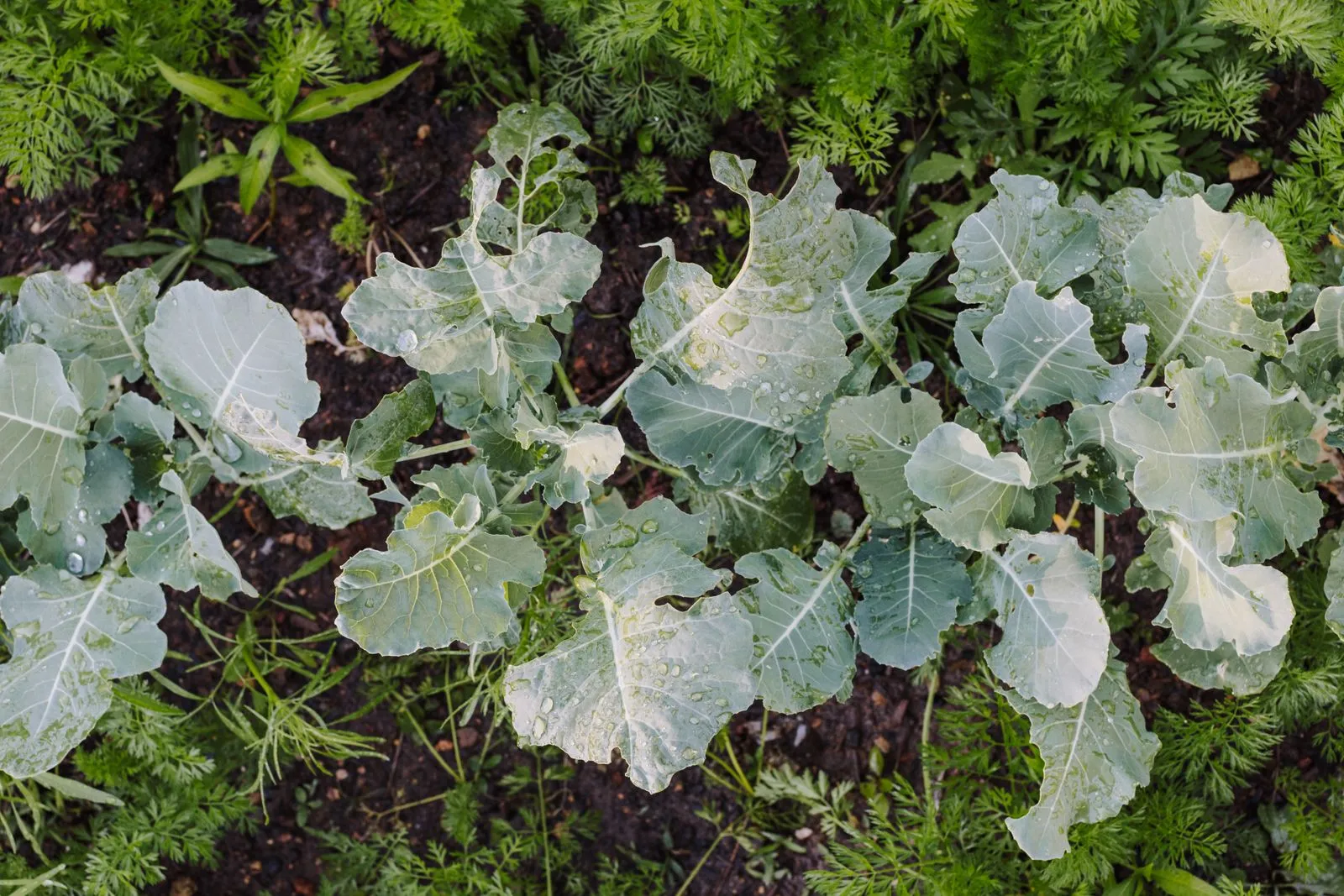
Kale a few weeks after sowing: pale veins, dew on the leaf, a rosette already forming. This is the stage to thin to one stem, before the leaves touch. Photo: K via Pexels (https://www.pexels.com/photo/top-view-of-a-kale-growing-in-a-farm-16678645/).
Light and water: 6 hours of sun, 1 to 2 inches a week
Give a pot six hours of direct sun. Alabama Extension puts kale in full sun at 6 to 8 hours, and Wisconsin Extension sets six hours as the floor for container vegetables generally. Kale tolerates partial shade better than any fruiting crop, so a balcony with morning sun and afternoon shade is workable — but it will grow more slowly and the leaves will be paler.
Water is where containers separate from beds, and it is the half of growing kale in pots that people underestimate. Alabama Extension’s rate is 1 to 2 inches of water a week, more in hot weather, and Wisconsin notes that as plants grow and temperatures rise, container plants may need water daily. A 5-gallon pot in July, in full sun, can go from soaked to wilting in a day and a half. That is not a watering mistake you made; it is the surface area of a bucket.
The test is the mix, two inches down, not the surface. If it is dry at two inches and the pot feels light, water until it runs out of the holes and tip away whatever the saucer holds. If it is damp at two inches, wait — kale roots rot faster in a sodden pot than in a dry one.
Growing kale in pots is a watering habit before it is anything else, and two habits keep the pot steady. Mulch the surface with an inch of compost or straw, which slows evaporation from the top inch where most of the roots are. And keep the leaves dry when you water, because Alabama Extension flags wet foliage as the route into fungal trouble. Water the mix, not the plant.
Cut-and-come-again: the harvest schedule that keeps a pot producing
Cut two or three of the oldest lower leaves at a time, and leave the center alone. Growing kale in pots rewards a light hand more than any technique in this article. That is the RHS’s own instruction, and it names the reason: regular picking encourages more growth. The growing tip is what makes new leaves; take it off and the plant has nothing left to build with.
A single 5-gallon plant will carry four to six cuts across a season if you are disciplined about it. That is the promise of growing kale in pots: not one big harvest, a long series of small ones. The schedule that has worked in my pots looks like this.
| Weeks from sowing | What to take | Why |
|---|---|---|
| 0 to 3 | Nothing. Keep the mix damp and the pot in full sun. | The plant is building its first root system. |
| 4 to 5 | Baby leaves from the outside, once plants are 4 to 6 inches tall | The RHS says a salad crop can be cut from 10 to 15 cm. |
| 6 to 8 | Two or three outer leaves per plant, every 10 to 14 days | First real kitchen harvest; 50 to 70 days from seed. |
| 9 to 16 | Two or three outer leaves per plant, every 10 days | Peak production. Water and feed now decide the size of the cut. |
| 17 to 30 | Outer leaves, less often, plus any yellowing leaf | Frost slows growth; flavor is best after a cold snap. |
The rule behind the table is that you never remove more than a third of the leaves at once. In 2026 I stripped one plant in a hurry before a dinner party and it took three weeks longer than its neighbor to produce anything worth cutting. That is the whole cost of impatience in a pot: not a dead plant, a stalled one.
There is a second harvest style, and it is worth knowing because it changes what you can do with a small pot. Instead of picking single leaves, cut the whole rosette a couple of inches above the mix and the plant re-sprouts for another crop, which the RHS lists as an alternative. It is faster to process and it resets the plant, but you lose two weeks of supply, so it suits a pot you are about to empty anyway.
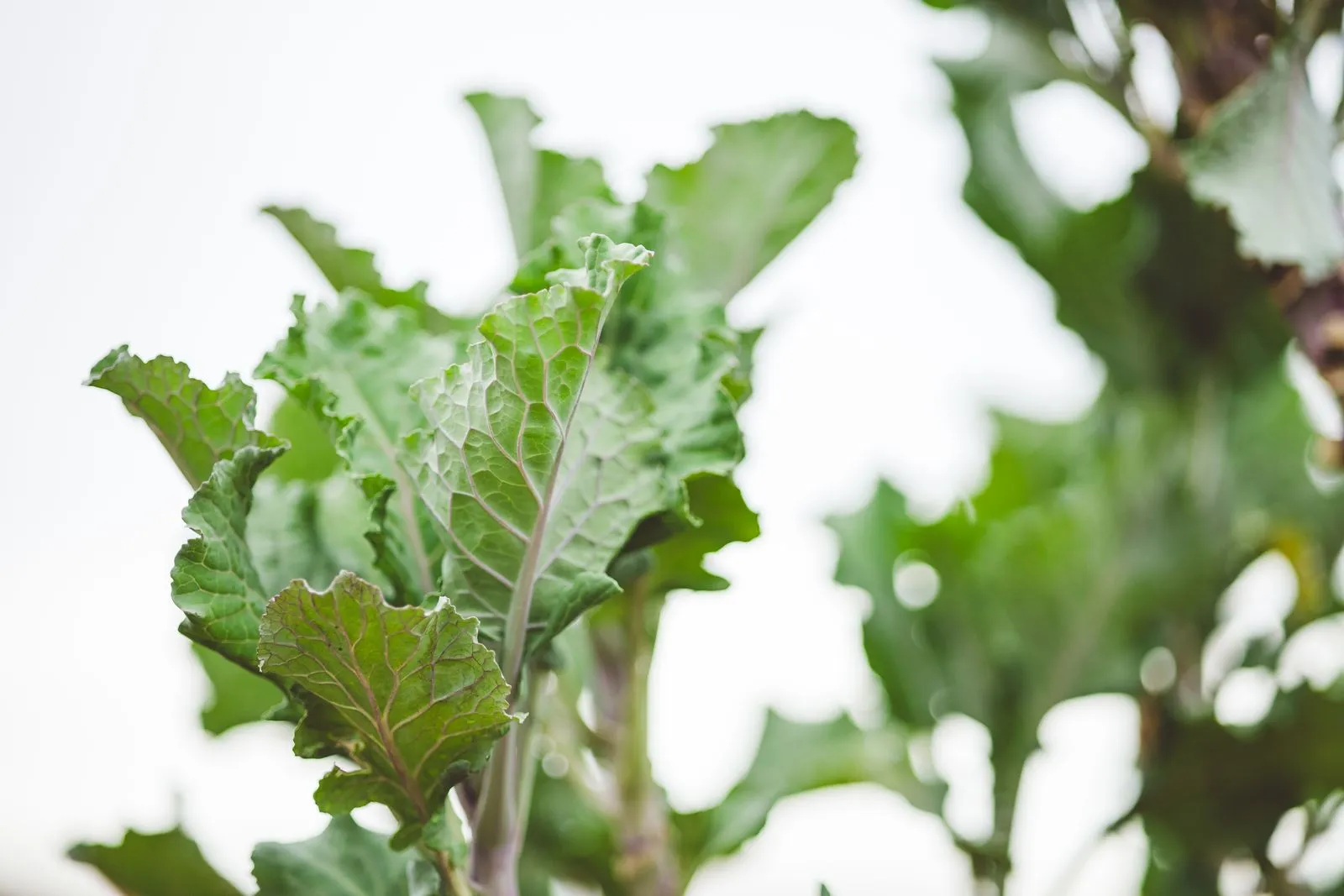
Curly kale at cutting size. Take the oldest, lowest leaves first and the rosette keeps filling from the middle. Photo: Rafael Rodrigues via Pexels (https://www.pexels.com/photo/green-curly-kale-leaves-18764109/).
Kale container gardening in 2027: a sowing calendar by USDA band
Frost dates are the only honest anchor for a sowing calendar, and they are local. The National Centers for Environmental Information publishes probable last-frost and first-frost dates by station, worked out from 30-year records, and NC State Extension explains how to read them: the tables give a 50% probability date, frost and freeze are different events, and frost risk rises once temperatures fall below 36°F. Find the station nearest you, take its 50% last-frost date, and count from that.
Kale earns this earliness because frost does not shock a mature plant: the RHS calls it one of the hardiest leafy vegetables, and describes the leaves as ready to pick from fall through spring. For a container vegetable garden the arithmetic is all relative to your own station’s dates, so the table below gives weeks, not invented dates. Two definitions first: “last frost” is the 50% last-spring-frost date for your station, and “first frost” is the equivalent in fall.
| USDA band | Start indoors | Direct sow in the pot | Fall crop: direct sow | First cut |
|---|---|---|---|---|
| 3 to 4 | 8 weeks before last frost | 2 weeks before last frost | 10 weeks before first frost | 8 to 10 weeks after sowing |
| 5 to 6 | 6 to 8 weeks before last frost | 2 to 4 weeks before last frost | 8 to 10 weeks before first frost | 8 weeks after sowing |
| 7 | 6 weeks before last frost | 3 to 4 weeks before last frost | 8 weeks before first frost | 7 to 8 weeks after sowing |
| 8 to 9 | 6 weeks before last frost | 4 weeks before last frost | 8 to 9 weeks before first frost | 7 weeks after sowing |
| 10 and warmer | Not needed — sow outdoors | Any time in the cool months | Through fall and winter | 6 to 7 weeks after sowing |
Worked once so the arithmetic is not abstract, and so the shape of every container vegetable garden calendar is visible. If your last frost is April 20 and you are in band 6: start seed indoors around March 2 to March 9, direct-sow seed in the pot from about March 23 to April 6, and expect the first proper cut in early June. If your first frost is October 15, a fall pot needs sowing by early August to be worth cutting before the cold.
Regionally the calendar bends in ways the bands do not show. In the Northeast the constraint is a short season, so spring transplants beat direct sowing and the fall crop is the better of the two.
In the Midwest the July heat is the enemy: kale sows best in late summer and crops through October, which is also when it tastes best — Alabama Extension notes kale is at its best before summer heat or after a fall frost. In the South both windows work and summer is the gap, so the spring crop finishes in June and the next pot goes in during August.
On the West Coast, where summer is cool and foggy, kale simply keeps going; the limit is water and slugs, not temperature.
The two pests that cost you a crop, and the net that stops both
Pests find a container vegetable garden as quickly as they find a field. Caterpillars arrive first. Cabbage loopers and imported cabbageworms chew ragged holes through the middle of leaves, and UC IPM notes the loopers lay eggs singly on the undersides of leaves, which is exactly where you are not looking. A young plant can tolerate a good deal of leaf damage without losing yield, but a plant stripped in a week while you are away is a different matter — that is a lost pot, not a setback.
Aphids arrive second and are worse than they look. Cabbage aphids cluster in dense gray-green colonies on the newest leaves, and UC IPM is clear about the trap: the leaves curl around the feeding sites, so sprays cannot reach the aphids inside. By the time the growing tip looks distorted, the damage is done. Numbers also rise after thinning and transplanting, which is one more reason to thin decisively and once.
Fine insect-proof mesh over the pot, held off the leaves on hoops, is the RHS’s recommendation and it solves both problems at once. It is unglamorous and it works; for kale container gardening on a balcony it is the most effective purchase after the pot itself, and it also stops the pigeons and cabbage whites that find a pot eventually. If you would rather not net, check the undersides of the newest leaves every few days and squash what you find; UC IPM points out that natural enemies, including the parasitic wasp Diaeretiella rapae, lady beetles and syrphid larvae, do real work if you leave them alone.
Feeding: side-dress at 4 to 6 weeks, then stop
A fresh mix carries enough starter nutrients for the first month or so. After that the plant is living on what you give it, and a pot has no subsoil to fall back on — in kale container gardening the mix is the entire soil profile, which is why feeding starts earlier than it would in a bed.
Alabama Extension’s routine is the one to copy: apply a nitrogen side-dress 4 to 6 inches from the stem, 4 to 6 weeks after planting. In a container vegetable garden, that translates to a liquid feed at half strength every two weeks, or a handful of compost worked into the surface. Either way it goes in at the edge of the pot, where the feeding roots are, not against the stem.
In a container vegetable garden more nitrogen is not better. Oversupply pushes soft, sappy leaves that aphids find first and that taste of nothing much; it also leaves salts to accumulate in the mix, which shows up later as leaf edges that burn brown. A steady moderate feed produces the firm, dark leaves you actually want to eat. Weak and often beats strong and rare.
Bolting, succession, and the second-year problem
Kale is a biennial. In its second spring, or in a sudden hot spell, it sends up a flower stalk and the leaves on that stalk turn small and bitter. That is not a failure — it is the plant finishing, and the fix is to pull it and put something else in the pot.
Growing kale in pots is a relay, not a single race, so the way to keep a pot in supply is succession rather than heroics. The RHS suggests sowing small batches over several weeks for a long season of baby leaves, which is the same logic as planting at intervals rather than all at once; the window-box method of staggered planting in a balcony window box garden uses exactly that trick with herbs. In practice, two or three 5-gallon pots started three weeks apart will out-supply four pots started on the same day, because the harvests do not arrive together.
Whatever else you do in kale container gardening, never grow kale in the same mix twice. The RHS is explicit that brassicas should be rotated with other crops to keep soil-borne problems from building up, and in a container the equivalent is to empty the pot, scrub it, and start with fresh mix. Reusing mix is how a container gets club root without ever touching your garden soil.
What one 5-gallon pot actually gives you
Growing kale in pots does not scale to a family, and it does not need to. In 2026, from one 5-gallon pot sown on 2 May, I cut eleven times between early June and 21 November — mostly two or three leaves at a time, most of them enough for two people at one meal. The same pot, sown with the same seed but left unthinned, gave three thin cuts and then bolted in August. That is the whole argument for the pot size and the thinning in one comparison.
Do not expect it to feed a household. Expect it to keep a kitchen in greens at the margin: a handful for a soup, a layer under a roast, a bag for the neighbor who is curious about the pots on the roof. For the space it takes, that is a very good return, and it is the reason a container vegetable garden of kale holds its ground on a balcony where tomatoes last about six weeks before something eats them.
That is the whole of growing kale in pots, and it is not much: set one pot up properly — 5 gallons, a dozen inches deep, a mix that drains, one stem thinned at three leaves — and the plant will do the rest for the better part of a year. Start the calendar from your own last-frost date, net the pot before the first white butterfly, and cut from the bottom. All the plant asks in return is water and the discipline not to take the growing tip. More small-space growing lives under Small Spaces.
QUESTIONS GARDENERS ASK
Common questions
How big a pot does kale need?
Five gallons minimum per plant, and at least 12 inches deep. Virginia Cooperative Extension's container table lists kale at a 5-gallon minimum with 10 to 15 inches between plants, and Wisconsin Extension puts a leafy crop of this size in the five-gallon-plus, 12-to-18-inch-deep class. A smaller pot works for baby leaves cut young, not for a plant you intend to harvest for months.
How many kale plants can I put in a 5-gallon pot?
One, if you are growing it to full size. Clemson Extension suggests spacing mature plants about 12 inches apart, and a 5-gallon pot is roughly 10 to 12 inches across at the rim. Three plants in a bucket compete for the same gallon of water and each stays small and thin-stemmed.
How long does kale take to grow in a pot?
Fifty to 70 days from sowing to a real harvest, depending on variety and how warm the season is. Virginia Cooperative Extension lists 55 to 65 days and Alabama Extension 50 to 70. Baby leaves come much sooner: the Royal Horticultural Society says to start cutting a salad crop once plants are 10 to 15 cm (4 to 6 inches) tall.
Can you grow kale in a pot through winter?
Through frost, yes. Kale is one of the hardiest leafy vegetables, and the Royal Horticultural Society describes the leaves as ready to pick from fall through spring. The plant shrugs off cold; the pot is the weak point, because a root ball in a small volume of mix can freeze solid with no subsoil behind it. Group pots together against a wall, and water less often rather than more.
How do you harvest kale so it keeps growing?
Take two or three of the oldest leaves from the bottom of the stem at a time, cutting the stalk cleanly, and leave the center of the rosette alone. The RHS gives exactly this method, and notes that regular picking encourages more leaves. Cutting the growing tip, or stripping a plant bare, is what ends its run.
How much sun does kale in a pot need?
Six hours of direct sun is the working minimum. Alabama Extension puts kale in full sun at 6 to 8 hours, and Wisconsin Extension says the same for container vegetables generally. Kale tolerates partial shade far better than a fruiting crop does, which is why a balcony with morning sun and afternoon shade suits it.
Why are my kale leaves turning yellow in the pot?
In a container it is nearly always water or nitrogen, in that order. Yellowing from the bottom of the plant with dry, light mix means the pot is starving and the older leaves are being stripped to feed the tip. Yellowing with a wet, sour-smelling mix means the roots are drowning. Check the mix two inches down before you feed anything.
Can I grow kale in the same pot every year?
Not without replacing the mix. Kale is a brassica, and the RHS notes that brassicas should be rotated with other crops to stop soil-borne problems building up. In a pot the answer is simpler: tip out the old mix, scrub the pot, and refill. Reusing it is how you get club root in a container that never touched your garden.
Sources
- RHS — How to grow kale
- Virginia Cooperative Extension — Vegetable Gardening in Containers (426-336)
- Clemson HGIC 1329 — Arugula, Kale, Mesclun, Mustard and Swiss Chard
- Wisconsin Extension XHT1278 — Growing Vegetables in Containers
- Alabama Cooperative Extension — Grow More Kale (ANR-2876)
- UC IPM — Cabbage Aphid on cole crops
- UC IPM — Cabbage Looper on cole crops
- NC State Extension — Interpreting freeze and frost probabilities from NCEI
 Small Spaces
Balcony Garden Ideas: 7 Simple Setups That Survive Wind
Balcony garden ideas that hold up in real wind: seven container setups sized for weight limits, small water volumes and the light a railing really gets.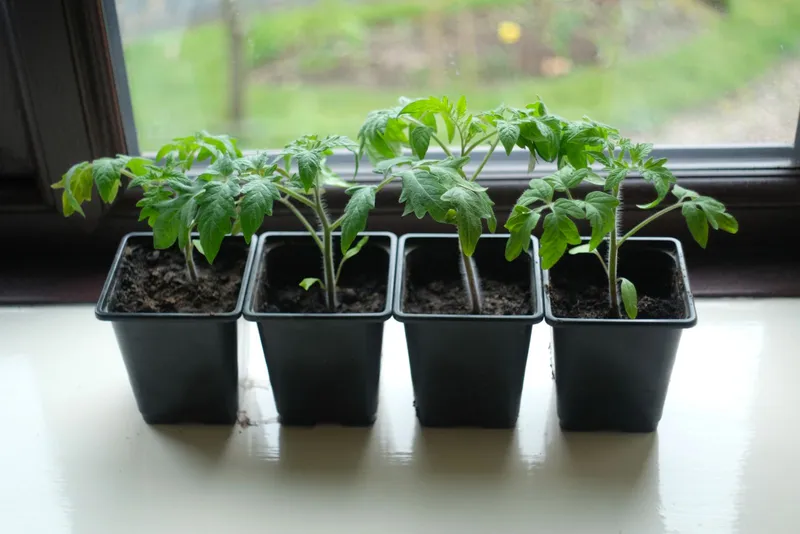 Outdoor Spaces
Growing Tomatoes in Containers: 5 Simple Rules for Pots
Growing tomatoes in containers works when the pot is measured in gallons: minimum pot volume, watering a small root zone, and varieties that fit a pot. Outdoor Spaces
How to Build a Raised Garden Bed: 6 Simple Steps
How to build a raised garden bed in one weekend: six steps from siting and lumber to a soil mix that drains, plus the 2027 dates to fill it by weather station.Reading us often? Add MyGreenyGarden as a preferred source on Google and our guides are more likely to be highlighted when you search.